Cosmovisión Wayuu - Agencia de viaje en La Guajira Agencia de viajes en La Guajira | History Travelers
History Travelers

For the Wayuu people, the world neither begins nor ends with what is visible. The desert, the wind, the rain, dreams, animals, the wisdom of elders, and the land are all part of the same tapestry. This, in essence, is the Wayuu worldview: a way of understanding life where nature, spirituality, memory, and community are inseparable.

To speak of the Wayuu worldview is not to speak of an isolated belief or a set of myths disconnected from the present. It is to speak of a living way of understanding origin, balance, death, family, dreams, and the relationship between people and their ancestral territory in La Guajira.

Therefore, when someone tries to understand Wayuu culture solely through its crafts, tourism, or desert landscapes, they remain on the surface. Their worldview is the deep root: the invisible structure that gives meaning to the clans, to language, to authority, to rituals, and to their relationship with nature.
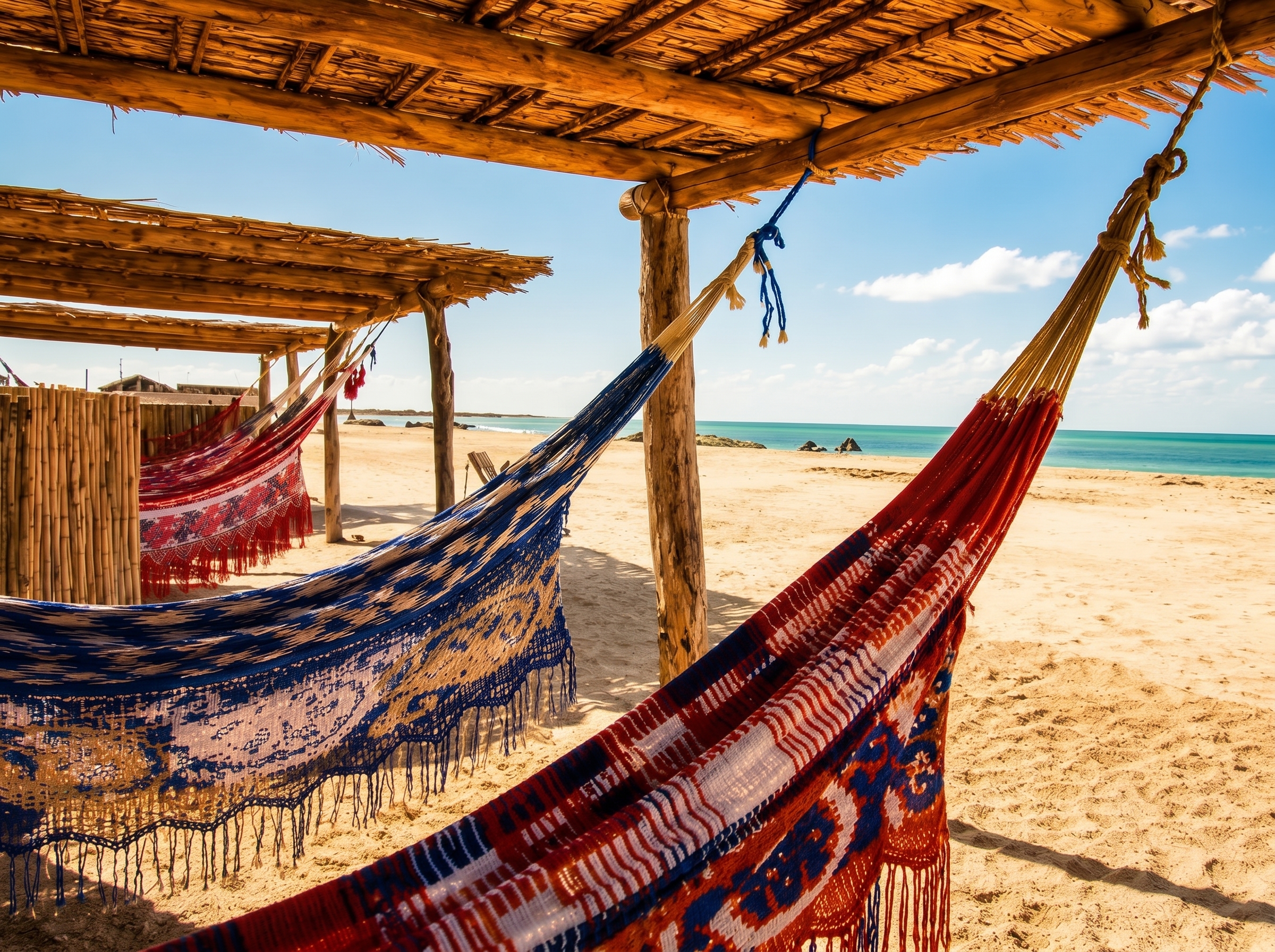
Paisaje de La Guajira que evoca la espiritualidad y la cosmovisión Wayuu
In Wayuu culture, territory, memory, and spirituality are all part of the same worldview. Photo: History Travelers

In this guide we will answer what the Wayuu worldview is, what its main elements are, what role Maleiwa, Juyá and Pulowi play, how dreams are understood, what the relationship with nature is and why this vision remains essential to understanding life in La Guajira.

· · ·

What is the Wayuu worldview?

The Wayuu worldview is how this indigenous people interprets the world, the origin of life, the relationship between human beings and nature, the role of spirits, the value of their territory, and the meaning of existence. It is not just about religion, nor just about oral tradition. It is a holistic way of understanding reality.

In this view, life is not divided into separate compartments. The material and spiritual worlds interact. Dreams have meaning. Death is not understood as an absolute rupture. Territory is not just a physical space. And the word of the elders retains profound authority.

One way to understand balance

More than an abstract system of ideas, the Wayuu worldview guides daily life. It is present in the way they name the territory, in their relationship with the cycles of rain and drought, in the interpretation of dreams, in their respect for elders, and in how they understand illness, death, and family ties.

Therefore, to speak of the Wayuu worldview is to speak of balance. The balance between community and nature. Between memory and the present. Between the visible and the invisible.

It is not a relic of the past

One of the most common misconceptions is that the Wayuu worldview belongs only to the past. In reality, it is still alive. It can transform, engage with the contemporary world, and adapt to new contexts, but it continues to be a profound reference point for many Wayuu communities in Colombia and Venezuela.

✦ The Wayuu worldview unites nature, spirituality, and community.
✦ It explains the relationship between territory, dreams, memory, and everyday life.
✦ It is not an isolated belief, but a comprehensive worldview.
✦ It remains alive in the current Wayuu culture.

Territory and nature in the Wayuu worldview

In the Wayuu worldview, territory is not merely a landscape. La Guajira is not simply sand, salt, wind, and sea. It is an ancestral space imbued with memory, signs, relationships, and spiritual meaning. There, every natural element can be linked to a story, a lesson, or a form of cultural guidance.

Therefore, to understand the Wayuu worldview, one must first stop viewing the land as merely a decorative backdrop. The desert, water, rain, animals, and wind are not simply resources of the environment: they are part of a living relationship between the community and the world.

Rain and drought as cultural forces

In a land marked by the contrasts between aridity and water, rain is not understood merely as a climatic phenomenon. It has a symbolic and vital presence. The same is true of drought, winds, and the natural cycles that shape life in the region.

Within the Wayuu worldview, these forces are not always separate from spirituality. The natural environment has a cultural depth that cannot be translated solely with technical categories.
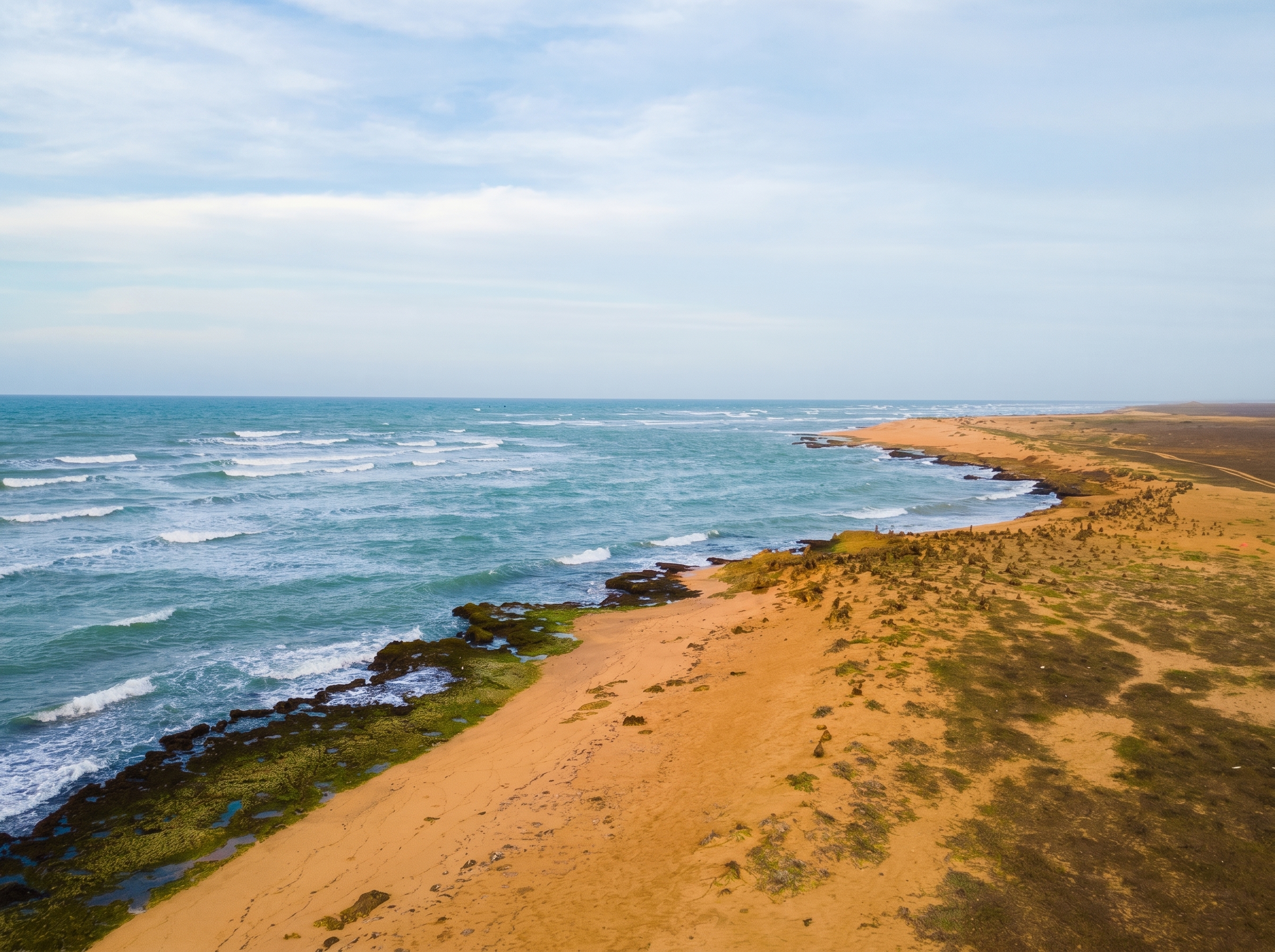
Territorio ancestral de La Guajira como parte de la cosmovisión Wayuu
For the Wayuu people, territory is memory, spiritual guidance, and cultural continuity. Photo: History Travelers

Maleiwa, Juyá and Pulowi in the Wayuu worldview

When explaining the Wayuu worldview, fundamental names like Maleiwa, Juyá, and Pulowi often appear. Although the internet often reduces them to a quick list of "Wayuu gods," the truth is that their meaning is more complex and should be approached with care.

Maleiwa is presented in many sources as a central creator figure within the Wayuu mythical universe. Juyá appears associated with rain and fertility. Pulowi, for his part, is usually related to feminine forces, the wild territory, the winds, or dimensions of power and danger, depending on the context of the story.

Why it's not a good idea to oversimplify them

Translating these figures solely into the language of “gods” can be a useful initial approach, but it falls short. The Wayuu worldview does not always fit well into Western religious equivalents. Therefore, it is better to present them as fundamental figures of the Wayuu symbolic universe, recognizing that their interpretation can vary depending on the story, the community, or the source.

Figure Frequent association How to treat it rigorously
Maleiwa central creative figure Present it as a key reference of the mythical Wayuu universe, avoiding excessive simplifications.
Juyá Rain, fertility, life force Explain its connection to nature and the cycles of the territory.
Pulowi Feminine forces, territory, power, risk Recognize that their meanings may vary according to stories and traditions.

The word of the elders and oral transmission

Much of the Wayuu worldview is transmitted orally. It doesn't live solely in written texts or academic definitions. It lives in the shared word, in origin stories, in family teachings, in everyday conversation, and in the memories of elders.

This explains why orality occupies such an important place within Wayuu culture. The spoken word is not only a means of communicating information. It is also a way to preserve identity and keep ancestral knowledge alive.

Memory as an inheritance

Listening to elders is not an empty symbolic gesture. It is a form of learning. Many keys to understanding life, the land, dreams, death, or proper conduct are transmitted precisely through this intergenerational relationship.

The Wayuu worldview is not preserved only in books. It is kept alive in the words of the elders, in the memory of the land, and in the teachings passed down from one generation to the next.

Why is the Wayuu worldview still so important today?

Because it continues to shape how many communities understand life, nature, authority, kinship, and spirituality. Even in contexts of change, migration, and modernization, this worldview continues to provide a profound foundation for Wayuu identity.

Understanding it not only allows us to get closer to the Wayuu culture, but also helps us see La Guajira with different eyes: not as an empty landscape or a remote tourist destination, but as a living territory, full of memory, meaning, and cultural presence.

Dreams in the Wayuu worldview

For many people outside of La Guajira, a dream might seem like just a fleeting image of the night. In the Wayuu worldview, however, dreams occupy a much deeper place. They are not always understood as a simple activity of the sleeping mind, but as a space where signs, warnings, guidance, or messages can appear that deserve to be heard and interpreted carefully.

This way of understanding dreams reveals something essential: in the Wayuu world, reality is not limited to the visible. Human experience is open to symbolic and spiritual dimensions that cannot be reduced to immediate material logic. Dreaming, therefore, is not a marginal detail. It is part of how life is read and interpreted.

Dreaming as a form of knowledge

Within this perspective, dreams can offer clues about decisions, dangers, illnesses, journeys, or family relationships. Not all dreams carry the same weight, nor do all people interpret them in the same way, but there is a tradition that grants them special value within everyday experience.

Therefore, when discussing the Wayuu worldview, dreams are not presented as an isolated superstition. They are part of a broader relationship between the individual, the spiritual world, memory, and the careful observation of life.

Interpretation is not automatic

It's important to avoid oversimplification. It's not about turning every dream into a literal prophecy. Rather, it's about recognizing that within Wayuu culture there is a willingness to listen to dreams as a significant dimension of experience, especially when that interpretation is based on the memory of elders and the knowledge passed down through the community.

Paisaje nocturno en La Guajira como referencia a los sueños en la cosmovisión Wayuu
In the Wayuu worldview, dreams can be a form of guidance, warning, and interpretation of the world. Photo: History Travelers
· · ·

Death and Jepirra in the Wayuu worldview

One of the most profound aspects of the Wayuu worldview is their understanding of death. From an outsider's perspective, it might be seen as an absolute end. But within the Wayuu cultural universe, death is not always understood as a definitive rupture, but rather as part of a transition that remains connected to memory, territory, and spiritual continuity.

In this context, Jepirra emerges as one of the most significant places within the Wayuu spiritual imaginary. Frequently associated with Cabo de la Vela, Jepirra occupies a central place in the way the passage of spirits and the relationship between the living and those who have departed are narrated.

Jepirra as a place of spiritual transit

To speak of Jepirra is not merely to speak of geography. It is to speak of a territory imbued with spiritual depth. In the Wayuu tradition, this place is linked to the journey of spirits and to a distinct way of understanding the continuity between life and death.

Therefore, Cabo de la Vela cannot be seen solely as a tourist destination with beautiful landscapes. For many Wayuu communities, this territory has a sacred significance and a symbolic weight that demands respect.

Death does not erase belonging

Within this perspective, death does not sever a person's connection to their family, lineage, or territory. The memory of ancestors continues to occupy a place in collective life, and cemeteries themselves can be understood as territorial markers of lineage and community continuity.

In the Wayuu worldview, death is not always understood as a definitive absence. It can also be a transition that keeps alive the relationship between memory, territory, and community.

Cemeteries as a memory of lineage

In many cultures, cemeteries are seen as spaces for farewells. In the Wayuu world, they can also be understood as territorial markers and as a form of writing collective memory. They are not only burial sites: they also express continuity, belonging, and family roots.

This helps us understand why the relationship between death, territory, and lineage is so profound. Memory is not suspended in an abstract idea; it is inscribed in concrete places, in familiar routes, and in ways of caring for ancestral space.

The territory also shelters the elderly

La Guajira is not just a stage where life unfolds. It is also the place where the imprint of those who came before remains. From this perspective, the territory is living memory, not an empty surface.

Women in Wayuu spirituality and cultural continuity

Within the Wayuu social and cultural organization, women occupy a central place. They not only transmit the clan in the matrilineal system, but also participate decisively in the continuity of memory, in family life, in raising children, in teaching, and in multiple dimensions of cultural sustenance.

When discussing the Wayuu worldview, this centrality of women cannot be overlooked. Women appear not only as domestic figures, but also as pillars of social continuity and, in many contexts, as guardians of knowledge that permeates the spiritual, familial, and symbolic life of the community.

Lineage, care, and transmission

The mother transmits the clan, but her role goes beyond lineage. She also participates in the transmission of practices, narratives, habits, knowledge, and ways of interpreting the world. In this sense, Wayuu cultural continuity cannot be conceived without the active presence of women.
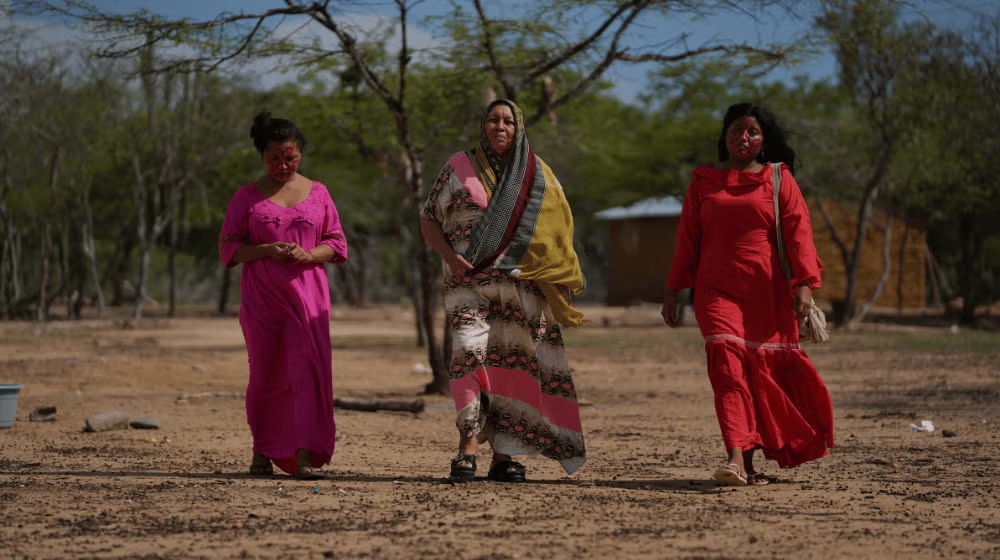
Mujer Wayuu como símbolo de continuidad cultural y memoria comunitaria
Women occupy a central place in the continuity of the Wayuu lineage, memory, and cultural life. Photo: History Travelers
· · ·

The word, authority, and community balance

The Wayuu worldview is not expressed solely in spiritual narratives. It also manifests itself in the way the community builds authority, resolves conflicts, and protects collective equilibrium. The spoken word plays a central role here. It is not just communication: it is mediation, memory, respect, and social order.

Therefore, understanding the Wayuu worldview also involves understanding why dialogue and well-used words are so important within community life.

The value of the wordsmith

Within the Wayuu community, the figure of the palabrero, or pütchipü'üi, holds extraordinary importance. Their role is linked to mediating between families, seeking agreements, and restoring balance when conflicts arise. More than imposing, the palabrero articulates the power of words as a path to understanding.

This institution cannot be separated from the Wayuu worldview. It expresses a way of understanding justice, authority, and coexistence where prestige, knowledge, and the ability to mediate have a decisive weight.

Authority without rigid centralization

Wayuu social organization does not always adhere to centralized power models. Authority is distributed among elders, families, lineages, and figures recognized for their experience and legitimacy. This form of organization is also part of their worldview: their own way of maintaining order without relying exclusively on state or bureaucratic structures.

Element Role within the Wayuu worldview Main idea
Dreams Orientation, warning, symbolic reading Reality is not limited to what is visible
Jepirra Place of spiritual transit Death is understood within a symbolic continuity
Women Transmission of lineage and cultural continuity Social and spiritual life is sustained by the maternal line.
Older Memory, teaching and guidance The inherited word preserves knowledge
Wordsmith Mediation and restoration of balance Words have social and legal power.

Why is this spiritual world still important today?

Because the Wayuu worldview doesn't belong solely to a ceremonial past. It continues to offer a way of understanding life, death, nature, kinship, and authority in the present. Even amidst social changes, migrations, and modern tensions, many of its key principles continue to shape the experience of their communities.

Understanding this is fundamental to avoiding a superficial view of La Guajira. It's not enough to admire the landscape or buy handicrafts. If you truly want to understand the territory, you must also recognize the spiritual and cultural depth that inhabits it.

And that depth often begins with something the modern world has forgotten to listen to: dreams, the words of elders, and the memory of the desert.

Dreams in the Wayuu worldview

For many people outside of La Guajira, a dream might seem like just a fleeting image of the night. In the Wayuu worldview, however, dreams occupy a much deeper place. They are not always understood as a simple activity of the sleeping mind, but as a space where signs, warnings, guidance, or messages can appear that deserve to be heard and interpreted carefully.

This way of understanding dreams reveals something essential: in the Wayuu world, reality is not limited to the visible. Human experience is open to symbolic and spiritual dimensions that cannot be reduced to immediate material logic. Dreaming, therefore, is not a marginal detail. It is part of how life is read and interpreted.

Dreaming as a form of knowledge

Within this perspective, dreams can offer clues about decisions, dangers, illnesses, journeys, or family relationships. Not all dreams carry the same weight, nor do all people interpret them in the same way, but there is a tradition that grants them special value within everyday experience.

Therefore, when discussing the Wayuu worldview, dreams are not presented as an isolated superstition. They are part of a broader relationship between the individual, the spiritual world, memory, and the careful observation of life.

Interpretation is not automatic

It's important to avoid oversimplification. It's not about turning every dream into a literal prophecy. Rather, it's about recognizing that within Wayuu culture there is a willingness to listen to dreams as a significant dimension of experience, especially when that interpretation is based on the memory of elders and the knowledge passed down through the community.

Paisaje nocturno en La Guajira como referencia a los sueños en la cosmovisión Wayuu
In the Wayuu worldview, dreams can be a form of guidance, warning, and interpretation of the world. Photo: History Travelers
· · ·

Death and Jepirra in the Wayuu worldview

One of the most profound aspects of the Wayuu worldview is their understanding of death. From an outsider's perspective, it might be seen as an absolute end. But within the Wayuu cultural universe, death is not always understood as a definitive rupture, but rather as part of a transition that remains connected to memory, territory, and spiritual continuity.

In this context, Jepirra emerges as one of the most significant places within the Wayuu spiritual imaginary. Frequently associated with Cabo de la Vela, Jepirra occupies a central place in the way the passage of spirits and the relationship between the living and those who have departed are narrated.

Jepirra as a place of spiritual transit

To speak of Jepirra is not merely to speak of geography. It is to speak of a territory imbued with spiritual depth. In the Wayuu tradition, this place is linked to the journey of spirits and to a distinct way of understanding the continuity between life and death.

Therefore, Cabo de la Vela cannot be seen solely as a tourist destination with beautiful landscapes. For many Wayuu communities, this territory has a sacred significance and a symbolic weight that demands respect.

Death does not erase belonging

Within this perspective, death does not sever a person's connection to their family, lineage, or territory. The memory of ancestors continues to occupy a place in collective life, and cemeteries themselves can be understood as territorial markers of lineage and community continuity.

In the Wayuu worldview, death is not always understood as a definitive absence. It can also be a transition that keeps alive the relationship between memory, territory, and community.

Cemeteries as a memory of lineage

In many cultures, cemeteries are seen as spaces for farewells. In the Wayuu world, they can also be understood as territorial markers and as a form of writing collective memory. They are not only burial sites: they also express continuity, belonging, and family roots.

This helps us understand why the relationship between death, territory, and lineage is so profound. Memory is not suspended in an abstract idea; it is inscribed in concrete places, in familiar routes, and in ways of caring for ancestral space.

The territory also shelters the elderly

La Guajira is not just a stage where life unfolds. It is also the place where the imprint of those who came before remains. From this perspective, the territory is living memory, not an empty surface.

Women in Wayuu spirituality and cultural continuity

Within the Wayuu social and cultural organization, women occupy a central place. They not only transmit the clan in the matrilineal system, but also participate decisively in the continuity of memory, in family life, in raising children, in teaching, and in multiple dimensions of cultural sustenance.

When discussing the Wayuu worldview, this centrality of women cannot be overlooked. Women appear not only as domestic figures, but also as pillars of social continuity and, in many contexts, as guardians of knowledge that permeates the spiritual, familial, and symbolic life of the community.

Lineage, care, and transmission

The mother transmits the clan, but her role goes beyond lineage. She also participates in the transmission of practices, narratives, habits, knowledge, and ways of interpreting the world. In this sense, Wayuu cultural continuity cannot be conceived without the active presence of women.

Mujer Wayuu como símbolo de continuidad cultural y memoria comunitaria
Women occupy a central place in the continuity of the Wayuu lineage, memory, and cultural life. Photo: History Travelers
· · ·

The word, authority, and community balance

The Wayuu worldview is not expressed solely in spiritual narratives. It also manifests itself in the way the community builds authority, resolves conflicts, and protects collective equilibrium. The spoken word plays a central role here. It is not just communication: it is mediation, memory, respect, and social order.

Therefore, understanding the Wayuu worldview also involves understanding why dialogue and well-used words are so important within community life.

The value of the wordsmith

Within the Wayuu community, the figure of the palabrero, or pütchipü'üi, holds extraordinary importance. Their role is linked to mediating between families, seeking agreements, and restoring balance when conflicts arise. More than imposing, the palabrero articulates the power of words as a path to understanding.

This institution cannot be separated from the Wayuu worldview. It expresses a way of understanding justice, authority, and coexistence where prestige, knowledge, and the ability to mediate have a decisive weight.

Authority without rigid centralization

Wayuu social organization does not always adhere to centralized power models. Authority is distributed among elders, families, lineages, and figures recognized for their experience and legitimacy. This form of organization is also part of their worldview: their own way of maintaining order without relying exclusively on state or bureaucratic structures.

Element Role within the Wayuu worldview Main idea
Dreams Orientation, warning, symbolic reading Reality is not limited to what is visible
Jepirra Place of spiritual transit Death is understood within a symbolic continuity
Women Transmission of lineage and cultural continuity Social and spiritual life is sustained by the maternal line.
Older Memory, teaching and guidance The inherited word preserves knowledge
Wordsmith Mediation and restoration of balance Words have social and legal power.

Why is this spiritual world still important today?

Because the Wayuu worldview doesn't belong solely to a ceremonial past. It continues to offer a way of understanding life, death, nature, kinship, and authority in the present. Even amidst social changes, migrations, and modern tensions, many of its key principles continue to shape the experience of their communities.

Understanding this is fundamental to avoiding a superficial view of La Guajira. It's not enough to admire the landscape or buy handicrafts. If you truly want to understand the territory, you must also recognize the spiritual and cultural depth that inhabits it.

And that depth often begins with something the modern world has forgotten to listen to: dreams, the words of elders, and the memory of the desert.

The Wayuu worldview in everyday life

The Wayuu worldview is not confined to origin stories, dreams, or sacred places. It is also present in daily life. It appears in the way they inhabit their settlements, in their relationships with elders, in child-rearing practices, in their respect for the spoken word, in their interpretation of nature, and in their understanding of illness, family, and territory.

Therefore, reducing Wayuu culture to mere artisanal aesthetics or a tourist experience would be to lose sight of its essence. Their worldview remains a concrete way of orienting existence. It is not only thought: it is also practice, memory, and a living relationship with the world.

A spirituality that is not separate from life

In many Western traditions, the spiritual and the everyday appear as distinct spheres. In the Wayuu worldview, this separation doesn't always make sense. Spirituality permeates daily life, family ties, important decisions, and the way they interpret what happens in their territory.
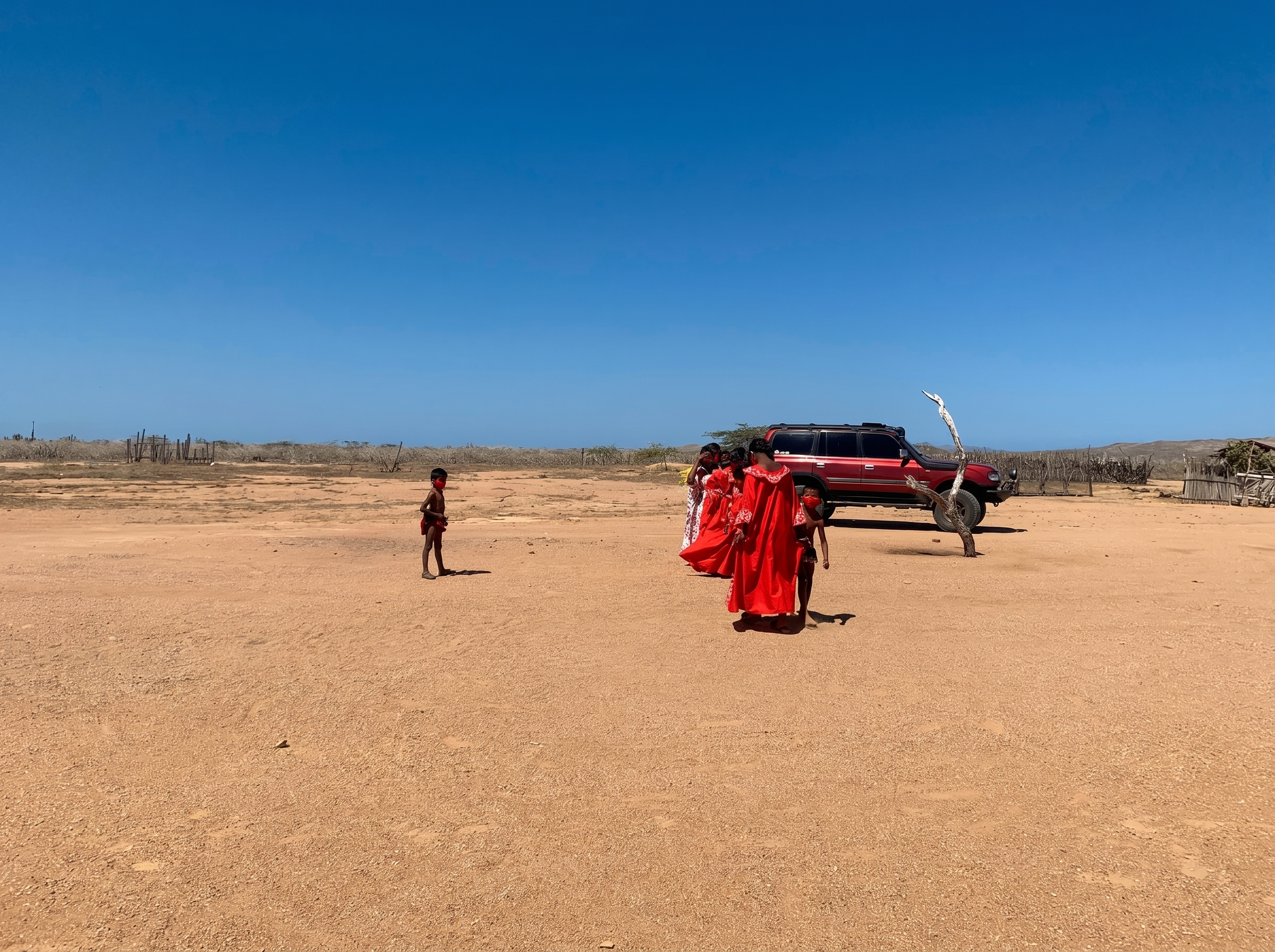
Escena cotidiana en ranchería Wayuu que refleje comunidad, memoria y vida diaria
The Wayuu worldview is not limited to the symbolic realm; it is also expressed in daily life. Photo: History Travelers
· · ·

How to understand the Wayuu worldview with more respect

One of the greatest challenges when discussing Indigenous worldviews is the temptation to oversimplify. Reducing a complex worldview to a quick list of beliefs may make it more digestible, but it also impoverishes it. In the case of the Wayuu, this occurs when everything is reduced to “their gods,” “their rituals,” or “their superstitions,” without acknowledging the profound cultural framework that organizes the relationship between community, territory, spirituality, and memory.

Understanding with greater respect means accepting that not everything fits neatly into external categories. It also means recognizing that some Wayuu knowledge is transmitted orally, through lived experience of the land, and through the words of those who belong to that culture.

Listen before you translate

Often, the first thing an outsider does is translate the Wayuu world into familiar categories. This impulse is understandable, but not always enough. Before translating, it's best to listen. Before classifying, it's best to observe. Before simplifying, it's best to recognize that one is entering a cultural universe with its own logic.

✦ The Wayuu worldview is not limited to isolated myths.
✦ The territory has a spiritual and cultural dimension.
✦ Dreams, words, and memory play a central role.
✦ Everyday life and spirituality are not completely separate.
✦ Understanding it requires more listening and less simplification.

This is how life is lived and told from the territory.

Reading about the Wayuu worldview helps. But hearing it within their territory completely transforms the experience. When knowledge ceases to be just a concept and becomes conversation, landscape, memory, and shared words, La Guajira begins to reveal itself in a different way.

@historytravelers

Frequently asked questions about the Wayuu worldview

What is the Wayuu worldview?

It is the way in which the Wayuu people understand life, nature, spirituality, death, territory and community.

Is the Wayuu worldview still alive today?

Yes. Although it engages with the contemporary world and undergoes transformations, it remains a deep cultural foundation for many Wayuu communities.

What role do dreams play?

Dreams can be interpreted as signs, warnings, or guidance within a tradition that recognizes symbolic and spiritual dimensions of experience.

Who is Maleiwa in Wayuu culture?

In many sources, he appears as a central creator figure within the mythical Wayuu universe.

What does Juyá represent?

It is often associated with rain, fertility, and vital forces linked to the territory.

What does Pulowi mean?

It relates to feminine forces, to territory, and to symbolic dimensions that may vary depending on the story or source.

What is Jepirra?

It is a deeply significant place within Wayuu spirituality, associated with the transit of spirits and with the territory of Cabo de la Vela.

Why is territory so important?

Because in the Wayuu worldview, territory is not just physical space: it is memory, cultural orientation, and spiritual presence.

What role do older people play?

They transmit knowledge, memory, origin stories, and keys to interpreting life within the Wayuu culture.

What is the relationship between the Wayuu worldview and the clans?

A profound relationship. The worldview helps to give meaning to kinship, lineage, territory, and community organization.

Is death understood as an absolute end?

Not necessarily. Within the Wayuu worldview, death can be understood as part of a transition linked to memory, territory, and spiritual continuity.

What role does woman play in this worldview?

A central role, both for the transmission of lineage and for its importance in cultural, family and symbolic continuity.

Final table to understand the Wayuu worldview

Key element What it expresses Why it matters
Territory Memory, spiritual presence and cultural continuity La Guajira is not just a landscape, but a lived world
Dreams Symbolic orientation and reading of experience They reveal that reality is not limited to what is visible.
Orality Transmission of ancestral knowledge Preserve collective memory and identity
Jepirra Spiritual transit and sacred depth of the territory It helps to understand the Wayuu relationship with death
Women Continuity of lineage and cultural support The maternal line is central to Wayuu life
Word Mediation, authority and balance Communication has social, ethical, and cultural power.

Conclusion

The Wayuu worldview is much more than a collection of traditional stories. It is a living way of understanding the world, where territory, dreams, language, memory, death, and community form a profound unity. Understanding it requires patience, respect, and a willingness not to reduce it to a quick explanation.

Perhaps that's why La Guajira changes so much when viewed from within its culture. The desert ceases to be empty. The wind ceases to be merely weather. Cabo de la Vela ceases to be merely landscape. Everything gains depth when one understands that behind each place lies a distinct way of understanding life.
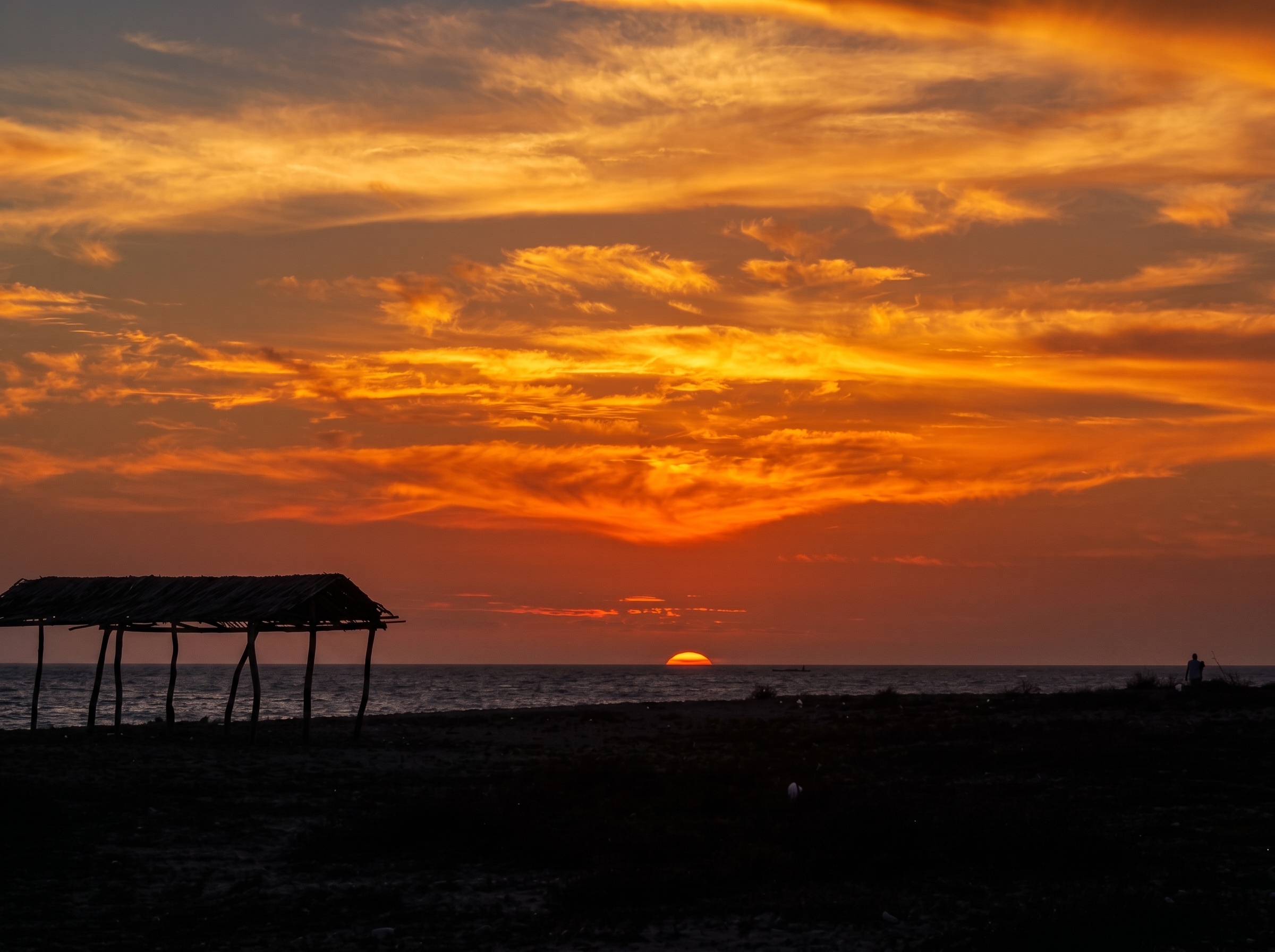
Paisaje de La Guajira al atardecer como cierre del artículo sobre cosmovisión Wayuu
Understanding the Wayuu worldview transforms the way we see the land. Photo: History Travelers

Continue exploring the Wayuu culture

If you want to delve deeper, you can also explore our content on Wayuu clans, Wayuu palabrero, Jepirra, Wayuu backpacks, Wayuu hammock and the cultural routes through Upper Guajira, Cape of the Sail, Punta Gallinas y Riohacha.

A natural invitation to experience it in the territory

Understanding the Wayuu worldview from a text is possible.

But hearing it in the territory, alongside those who live it, completely transforms the experience.

During our cultural expeditions we share this knowledge with local communities and voices in La Guajira.

Leave a Reply

Your email address will not be published. Required fields are marked *

Ready to explore? Book via WhatsApp
Link copied!
Cosmovisión Wayuu
La Guajira

Wayuu worldview

admin
admin
History Travelers Team
August 6, 2026 33 min read

For the Wayuu people, the world neither begins nor ends with what is visible. The desert, the wind, the rain, dreams, animals, the wisdom of elders, and the land are all part of the same tapestry. This, in essence, is the Wayuu worldview: a way of understanding life where nature, spirituality, memory, and community are inseparable.

To speak of the Wayuu worldview is not to speak of an isolated belief or a set of myths disconnected from the present. It is to speak of a living way of understanding origin, balance, death, family, dreams, and the relationship between people and their ancestral territory in La Guajira.

Therefore, when someone tries to understand Wayuu culture solely through its crafts, tourism, or desert landscapes, they remain on the surface. Their worldview is the deep root: the invisible structure that gives meaning to the clans, to language, to authority, to rituals, and to their relationship with nature.

Paisaje de La Guajira que evoca la espiritualidad y la cosmovisión Wayuu
In Wayuu culture, territory, memory, and spirituality are all part of the same worldview. Photo: History Travelers

In this guide we will answer what the Wayuu worldview is, what its main elements are, what role Maleiwa, Juyá and Pulowi play, how dreams are understood, what the relationship with nature is and why this vision remains essential to understanding life in La Guajira.

· · ·

What is the Wayuu worldview?

The Wayuu worldview is how this indigenous people interprets the world, the origin of life, the relationship between human beings and nature, the role of spirits, the value of their territory, and the meaning of existence. It is not just about religion, nor just about oral tradition. It is a holistic way of understanding reality.

In this view, life is not divided into separate compartments. The material and spiritual worlds interact. Dreams have meaning. Death is not understood as an absolute rupture. Territory is not just a physical space. And the word of the elders retains profound authority.

One way to understand balance

More than an abstract system of ideas, the Wayuu worldview guides daily life. It is present in the way they name the territory, in their relationship with the cycles of rain and drought, in the interpretation of dreams, in their respect for elders, and in how they understand illness, death, and family ties.

Therefore, to speak of the Wayuu worldview is to speak of balance. The balance between community and nature. Between memory and the present. Between the visible and the invisible.

It is not a relic of the past

One of the most common misconceptions is that the Wayuu worldview belongs only to the past. In reality, it is still alive. It can transform, engage with the contemporary world, and adapt to new contexts, but it continues to be a profound reference point for many Wayuu communities in Colombia and Venezuela.

✦ The Wayuu worldview unites nature, spirituality, and community.
✦ It explains the relationship between territory, dreams, memory, and everyday life.
✦ It is not an isolated belief, but a comprehensive worldview.
✦ It remains alive in the current Wayuu culture.

Territory and nature in the Wayuu worldview

In the Wayuu worldview, territory is not merely a landscape. La Guajira is not simply sand, salt, wind, and sea. It is an ancestral space imbued with memory, signs, relationships, and spiritual meaning. There, every natural element can be linked to a story, a lesson, or a form of cultural guidance.

Therefore, to understand the Wayuu worldview, one must first stop viewing the land as merely a decorative backdrop. The desert, water, rain, animals, and wind are not simply resources of the environment: they are part of a living relationship between the community and the world.

Rain and drought as cultural forces

In a land marked by the contrasts between aridity and water, rain is not understood merely as a climatic phenomenon. It has a symbolic and vital presence. The same is true of drought, winds, and the natural cycles that shape life in the region.

Within the Wayuu worldview, these forces are not always separate from spirituality. The natural environment has a cultural depth that cannot be translated solely with technical categories.

Territorio ancestral de La Guajira como parte de la cosmovisión Wayuu
For the Wayuu people, territory is memory, spiritual guidance, and cultural continuity. Photo: History Travelers

Maleiwa, Juyá and Pulowi in the Wayuu worldview

When explaining the Wayuu worldview, fundamental names like Maleiwa, Juyá, and Pulowi often appear. Although the internet often reduces them to a quick list of "Wayuu gods," the truth is that their meaning is more complex and should be approached with care.

Maleiwa is presented in many sources as a central creator figure within the Wayuu mythical universe. Juyá appears associated with rain and fertility. Pulowi, for his part, is usually related to feminine forces, the wild territory, the winds, or dimensions of power and danger, depending on the context of the story.

Why it's not a good idea to oversimplify them

Translating these figures solely into the language of “gods” can be a useful initial approach, but it falls short. The Wayuu worldview does not always fit well into Western religious equivalents. Therefore, it is better to present them as fundamental figures of the Wayuu symbolic universe, recognizing that their interpretation can vary depending on the story, the community, or the source.

Figure Frequent association How to treat it rigorously
Maleiwa central creative figure Present it as a key reference of the mythical Wayuu universe, avoiding excessive simplifications.
Juyá Rain, fertility, life force Explain its connection to nature and the cycles of the territory.
Pulowi Feminine forces, territory, power, risk Recognize that their meanings may vary according to stories and traditions.

The word of the elders and oral transmission

Much of the Wayuu worldview is transmitted orally. It doesn't live solely in written texts or academic definitions. It lives in the shared word, in origin stories, in family teachings, in everyday conversation, and in the memories of elders.

This explains why orality occupies such an important place within Wayuu culture. The spoken word is not only a means of communicating information. It is also a way to preserve identity and keep ancestral knowledge alive.

Memory as an inheritance

Listening to elders is not an empty symbolic gesture. It is a form of learning. Many keys to understanding life, the land, dreams, death, or proper conduct are transmitted precisely through this intergenerational relationship.

The Wayuu worldview is not preserved only in books. It is kept alive in the words of the elders, in the memory of the land, and in the teachings passed down from one generation to the next.

Why is the Wayuu worldview still so important today?

Because it continues to shape how many communities understand life, nature, authority, kinship, and spirituality. Even in contexts of change, migration, and modernization, this worldview continues to provide a profound foundation for Wayuu identity.

Understanding it not only allows us to get closer to the Wayuu culture, but also helps us see La Guajira with different eyes: not as an empty landscape or a remote tourist destination, but as a living territory, full of memory, meaning, and cultural presence.

Dreams in the Wayuu worldview

For many people outside of La Guajira, a dream might seem like just a fleeting image of the night. In the Wayuu worldview, however, dreams occupy a much deeper place. They are not always understood as a simple activity of the sleeping mind, but as a space where signs, warnings, guidance, or messages can appear that deserve to be heard and interpreted carefully.

This way of understanding dreams reveals something essential: in the Wayuu world, reality is not limited to the visible. Human experience is open to symbolic and spiritual dimensions that cannot be reduced to immediate material logic. Dreaming, therefore, is not a marginal detail. It is part of how life is read and interpreted.

Dreaming as a form of knowledge

Within this perspective, dreams can offer clues about decisions, dangers, illnesses, journeys, or family relationships. Not all dreams carry the same weight, nor do all people interpret them in the same way, but there is a tradition that grants them special value within everyday experience.

Therefore, when discussing the Wayuu worldview, dreams are not presented as an isolated superstition. They are part of a broader relationship between the individual, the spiritual world, memory, and the careful observation of life.

Interpretation is not automatic

It's important to avoid oversimplification. It's not about turning every dream into a literal prophecy. Rather, it's about recognizing that within Wayuu culture there is a willingness to listen to dreams as a significant dimension of experience, especially when that interpretation is based on the memory of elders and the knowledge passed down through the community.

Paisaje nocturno en La Guajira como referencia a los sueños en la cosmovisión Wayuu
In the Wayuu worldview, dreams can be a form of guidance, warning, and interpretation of the world. Photo: History Travelers
· · ·

Death and Jepirra in the Wayuu worldview

One of the most profound aspects of the Wayuu worldview is their understanding of death. From an outsider's perspective, it might be seen as an absolute end. But within the Wayuu cultural universe, death is not always understood as a definitive rupture, but rather as part of a transition that remains connected to memory, territory, and spiritual continuity.

In this context, Jepirra emerges as one of the most significant places within the Wayuu spiritual imaginary. Frequently associated with Cabo de la Vela, Jepirra occupies a central place in the way the passage of spirits and the relationship between the living and those who have departed are narrated.

Jepirra as a place of spiritual transit

To speak of Jepirra is not merely to speak of geography. It is to speak of a territory imbued with spiritual depth. In the Wayuu tradition, this place is linked to the journey of spirits and to a distinct way of understanding the continuity between life and death.

Therefore, Cabo de la Vela cannot be seen solely as a tourist destination with beautiful landscapes. For many Wayuu communities, this territory has a sacred significance and a symbolic weight that demands respect.

Death does not erase belonging

Within this perspective, death does not sever a person's connection to their family, lineage, or territory. The memory of ancestors continues to occupy a place in collective life, and cemeteries themselves can be understood as territorial markers of lineage and community continuity.

In the Wayuu worldview, death is not always understood as a definitive absence. It can also be a transition that keeps alive the relationship between memory, territory, and community.

Cemeteries as a memory of lineage

In many cultures, cemeteries are seen as spaces for farewells. In the Wayuu world, they can also be understood as territorial markers and as a form of writing collective memory. They are not only burial sites: they also express continuity, belonging, and family roots.

This helps us understand why the relationship between death, territory, and lineage is so profound. Memory is not suspended in an abstract idea; it is inscribed in concrete places, in familiar routes, and in ways of caring for ancestral space.

The territory also shelters the elderly

La Guajira is not just a stage where life unfolds. It is also the place where the imprint of those who came before remains. From this perspective, the territory is living memory, not an empty surface.

Women in Wayuu spirituality and cultural continuity

Within the Wayuu social and cultural organization, women occupy a central place. They not only transmit the clan in the matrilineal system, but also participate decisively in the continuity of memory, in family life, in raising children, in teaching, and in multiple dimensions of cultural sustenance.

When discussing the Wayuu worldview, this centrality of women cannot be overlooked. Women appear not only as domestic figures, but also as pillars of social continuity and, in many contexts, as guardians of knowledge that permeates the spiritual, familial, and symbolic life of the community.

Lineage, care, and transmission

The mother transmits the clan, but her role goes beyond lineage. She also participates in the transmission of practices, narratives, habits, knowledge, and ways of interpreting the world. In this sense, Wayuu cultural continuity cannot be conceived without the active presence of women.

Mujer Wayuu como símbolo de continuidad cultural y memoria comunitaria
Women occupy a central place in the continuity of the Wayuu lineage, memory, and cultural life. Photo: History Travelers
· · ·

The word, authority, and community balance

The Wayuu worldview is not expressed solely in spiritual narratives. It also manifests itself in the way the community builds authority, resolves conflicts, and protects collective equilibrium. The spoken word plays a central role here. It is not just communication: it is mediation, memory, respect, and social order.

Therefore, understanding the Wayuu worldview also involves understanding why dialogue and well-used words are so important within community life.

The value of the wordsmith

Within the Wayuu community, the figure of the palabrero, or pütchipü'üi, holds extraordinary importance. Their role is linked to mediating between families, seeking agreements, and restoring balance when conflicts arise. More than imposing, the palabrero articulates the power of words as a path to understanding.

This institution cannot be separated from the Wayuu worldview. It expresses a way of understanding justice, authority, and coexistence where prestige, knowledge, and the ability to mediate have a decisive weight.

Authority without rigid centralization

Wayuu social organization does not always adhere to centralized power models. Authority is distributed among elders, families, lineages, and figures recognized for their experience and legitimacy. This form of organization is also part of their worldview: their own way of maintaining order without relying exclusively on state or bureaucratic structures.

Element Role within the Wayuu worldview Main idea
Dreams Orientation, warning, symbolic reading Reality is not limited to what is visible
Jepirra Place of spiritual transit Death is understood within a symbolic continuity
Women Transmission of lineage and cultural continuity Social and spiritual life is sustained by the maternal line.
Older Memory, teaching and guidance The inherited word preserves knowledge
Wordsmith Mediation and restoration of balance Words have social and legal power.

Why is this spiritual world still important today?

Because the Wayuu worldview doesn't belong solely to a ceremonial past. It continues to offer a way of understanding life, death, nature, kinship, and authority in the present. Even amidst social changes, migrations, and modern tensions, many of its key principles continue to shape the experience of their communities.

Understanding this is fundamental to avoiding a superficial view of La Guajira. It's not enough to admire the landscape or buy handicrafts. If you truly want to understand the territory, you must also recognize the spiritual and cultural depth that inhabits it.

And that depth often begins with something the modern world has forgotten to listen to: dreams, the words of elders, and the memory of the desert.

The Wayuu worldview in everyday life

The Wayuu worldview is not confined to origin stories, dreams, or sacred places. It is also present in daily life. It appears in the way they inhabit their settlements, in their relationships with elders, in child-rearing practices, in their respect for the spoken word, in their interpretation of nature, and in their understanding of illness, family, and territory.

Therefore, reducing Wayuu culture to mere artisanal aesthetics or a tourist experience would be to lose sight of its essence. Their worldview remains a concrete way of orienting existence. It is not only thought: it is also practice, memory, and a living relationship with the world.

A spirituality that is not separate from life

In many Western traditions, the spiritual and the everyday appear as distinct spheres. In the Wayuu worldview, this separation doesn't always make sense. Spirituality permeates daily life, family ties, important decisions, and the way they interpret what happens in their territory.

Escena cotidiana en ranchería Wayuu que refleje comunidad, memoria y vida diaria
The Wayuu worldview is not limited to the symbolic realm; it is also expressed in daily life. Photo: History Travelers
· · ·

How to understand the Wayuu worldview with more respect

One of the greatest challenges when discussing Indigenous worldviews is the temptation to oversimplify. Reducing a complex worldview to a quick list of beliefs may make it more digestible, but it also impoverishes it. In the case of the Wayuu, this occurs when everything is reduced to “their gods,” “their rituals,” or “their superstitions,” without acknowledging the profound cultural framework that organizes the relationship between community, territory, spirituality, and memory.

Understanding with greater respect means accepting that not everything fits neatly into external categories. It also means recognizing that some Wayuu knowledge is transmitted orally, through lived experience of the land, and through the words of those who belong to that culture.

Listen before you translate

Often, the first thing an outsider does is translate the Wayuu world into familiar categories. This impulse is understandable, but not always enough. Before translating, it's best to listen. Before classifying, it's best to observe. Before simplifying, it's best to recognize that one is entering a cultural universe with its own logic.

✦ The Wayuu worldview is not limited to isolated myths.
✦ The territory has a spiritual and cultural dimension.
✦ Dreams, words, and memory play a central role.
✦ Everyday life and spirituality are not completely separate.
✦ Understanding it requires more listening and less simplification.

This is how life is lived and told from the territory.

Reading about the Wayuu worldview helps. But hearing it within their territory completely transforms the experience. When knowledge ceases to be just a concept and becomes conversation, landscape, memory, and shared words, La Guajira begins to reveal itself in a different way.

Frequently asked questions about the Wayuu worldview

What is the Wayuu worldview?

It is the way in which the Wayuu people understand life, nature, spirituality, death, territory and community.

Is the Wayuu worldview still alive today?

Yes. Although it engages with the contemporary world and undergoes transformations, it remains a deep cultural foundation for many Wayuu communities.

What role do dreams play?

Dreams can be interpreted as signs, warnings, or guidance within a tradition that recognizes symbolic and spiritual dimensions of experience.

Who is Maleiwa in Wayuu culture?

In many sources, he appears as a central creator figure within the mythical Wayuu universe.

What does Juyá represent?

It is often associated with rain, fertility, and vital forces linked to the territory.

What does Pulowi mean?

It relates to feminine forces, to territory, and to symbolic dimensions that may vary depending on the story or source.

What is Jepirra?

It is a deeply significant place within Wayuu spirituality, associated with the transit of spirits and with the territory of Cabo de la Vela.

Why is territory so important?

Because in the Wayuu worldview, territory is not just physical space: it is memory, cultural orientation, and spiritual presence.

What role do older people play?

They transmit knowledge, memory, origin stories, and keys to interpreting life within the Wayuu culture.

What is the relationship between the Wayuu worldview and the clans?

A profound relationship. The worldview helps to give meaning to kinship, lineage, territory, and community organization.

Is death understood as an absolute end?

Not necessarily. Within the Wayuu worldview, death can be understood as part of a transition linked to memory, territory, and spiritual continuity.

What role does woman play in this worldview?

A central role, both for the transmission of lineage and for its importance in cultural, family and symbolic continuity.

Final table to understand the Wayuu worldview

Key element What it expresses Why it matters
Territory Memory, spiritual presence and cultural continuity La Guajira is not just a landscape, but a lived world
Dreams Symbolic orientation and reading of experience They reveal that reality is not limited to what is visible.
Orality Transmission of ancestral knowledge Preserve collective memory and identity
Jepirra Spiritual transit and sacred depth of the territory It helps to understand the Wayuu relationship with death
Women Continuity of lineage and cultural support The maternal line is central to Wayuu life
Word Mediation, authority and balance Communication has social, ethical, and cultural power.

Conclusion

The Wayuu worldview is much more than a collection of traditional stories. It is a living way of understanding the world, where territory, dreams, language, memory, death, and community form a profound unity. Understanding it requires patience, respect, and a willingness not to reduce it to a quick explanation.

Perhaps that's why La Guajira changes so much when viewed from within its culture. The desert ceases to be empty. The wind ceases to be merely weather. Cabo de la Vela ceases to be merely landscape. Everything gains depth when one understands that behind each place lies a distinct way of understanding life.

Paisaje de La Guajira al atardecer como cierre del artículo sobre cosmovisión Wayuu
Understanding the Wayuu worldview transforms the way we see the land. Photo: History Travelers

Continue exploring the Wayuu culture

If you want to delve deeper, you can also explore our content on Wayuu clans, Wayuu palabrero, Jepirra, Wayuu backpacks, Wayuu hammock and the cultural routes through Upper Guajira, Cape of the Sail, Punta Gallinas y Riohacha.

A natural invitation to experience it in the territory

Understanding the Wayuu worldview from a text is possible.

But hearing it in the territory, alongside those who live it, completely transforms the experience.

During our cultural expeditions we share this knowledge with local communities and voices in La Guajira.
Did you like this story?
Share it and help more travelers discover La Guajira
admin
Written by
admin

Traveler and storyteller from La Guajira. Passionate about Wayuu culture and the landscapes of the Colombian Caribbean.