Located at the northernmost tip of the South American continent, La Guajira is a blend of wild landscapes, myths, and legends. There's no great comfort here, but there is a genuine adventure that will transform you.
We are from Riohacha. We have been operating tours in La Guajira for over ten years, we know the Wayuu families who run the rancherías personally, and we have traveled every route in this desert in all seasons.
La Guajira and its desert

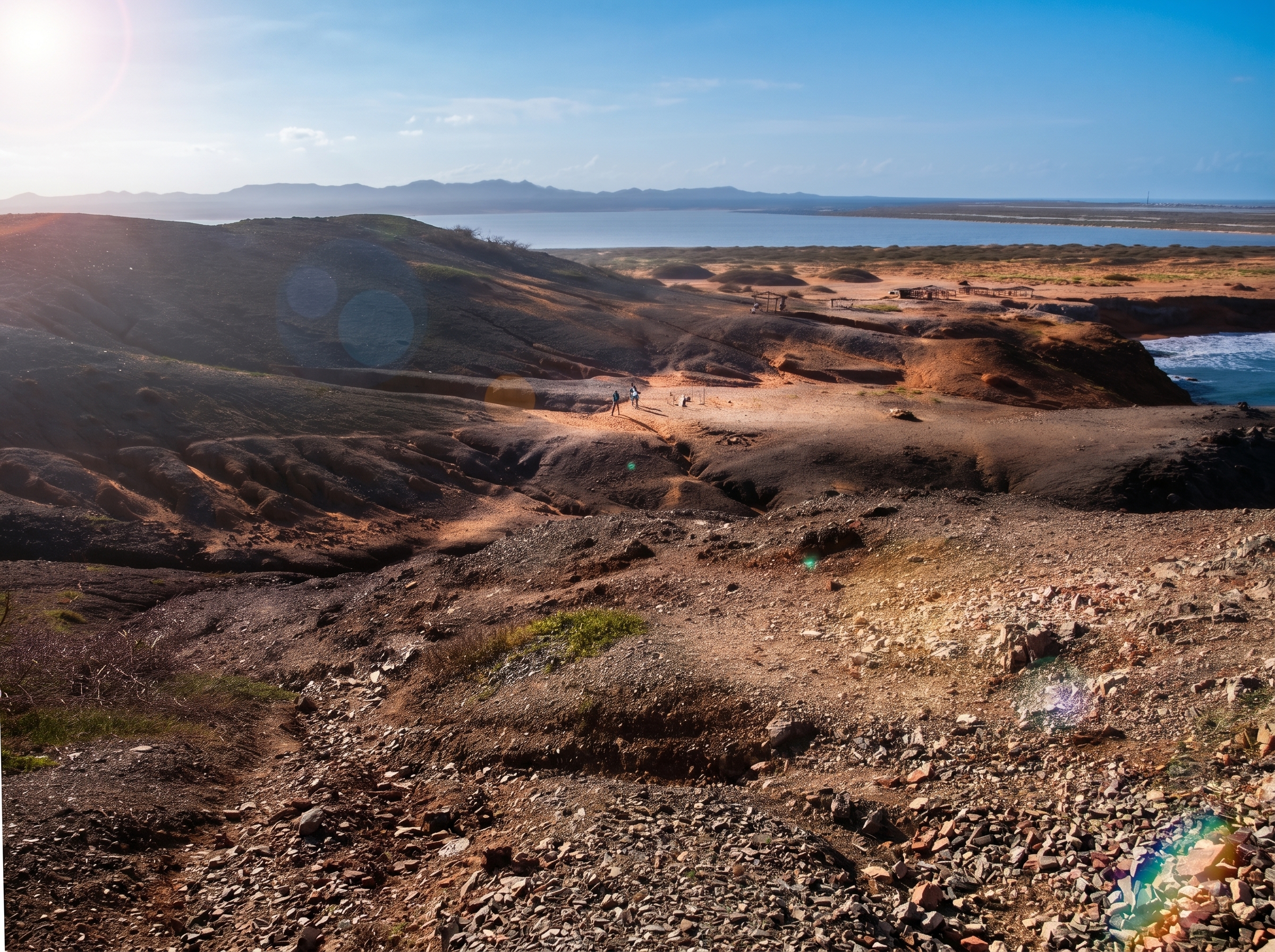
The Upper Guajira: where the desert plunges into the Caribbean Sea · Photo: History Travelers
Where is La Guajira?
Located in the northeasternmost part of the country on the Caribbean Sea, La Guajira is one of the 32 departments of Colombia. It borders... Venezuela and encompasses 20,848 km². Its capital is Riohacha and its second largest municipality is Uribia, known as the indigenous capital of Colombia.
La Guajira is divided into three zones: Upper Guajira, Media Guajira y Lower Guajira. The department has three national parks and is the birthplace of the Wayuu, the largest indigenous group in Colombia and Venezuela — the 45% of the population, more than a million people.
Why visit La Guajira?
Travelers come to La Guajira to marvel at the vast expanse of desert that plunges into the turquoise sea and at sunsets unlike any other in Colombia. The amazing ecosystems of Macuira Park They fascinate nature lovers, and the culture of the Wayuu — the guardians of La Guajira — captivates everyone who arrives with open eyes.
With its constant winds, calm waters, and unparalleled visual environment, La Guajira is also a kitesurfing paradise World-renowned. For us, La Guajira means adventure in an extraordinary setting with harsh and demanding natural conditions. That is precisely what makes it unique.
The best time to visit
How many days are enough?
To discover the desert, the best thing to do is to take a tour from Riohacha. A 3-day tour (2 nights) It covers Cabo de la Vela and Punta Gallinas. 4-day tour (3 nights) Add Macuira Park — our most comprehensive recommendation. To simplify logistics, we recommend spending the night before the tour in Riohacha.
Local Council: Book at least 2–3 weeks in advance during peak season (December–January, Easter week). Accommodations at the Punta Gallinas ranches fill up quickly. Write to us on WhatsApp →
Visit the Upper Guajira
The most remote and spectacular territory of La Guajira, in sacred Wayuu lands.

Macuira National Park: the desert oasis
Macuira National Park is our favorite place in all of La Guajira—and the one that most surprises visitors. A cloud forest in the middle of the desert with waterfalls, orchids, and endemic birds that no one expects to find surrounded by sand and cacti. The gateway is the town of Nazareth. Macuira is generally closed from August to November — please confirm availability before listing it.
View tours that include Macuira →
Cabo de la Vela: the best viewpoints in La Guajira
The convergence of desert and sea creates breathtaking landscapes. Sugar Loaf — a hill that drops directly into the Caribbean — and the sunsets from The Lighthouse These are the moments travelers remember years later. The constant wind also makes it a favorite among tourists. kitesurfers of the world. Going to Cabo de la Vela and not climbing to the Pilón at sunset is the only mistake you can't make.
View Cabo de la Vela tour →
Punta Gallinas: the end of a continent
The northernmost point of South America is home to the Taroa dunes — sand dunes up to 40 meters high that plunge directly into the Caribbean Sea. Sandboarding from the top to the water is one of the most exhilarating experiences in Colombia. There are also secluded beaches, Hondita Bay, flamingos, and the northernmost lighthouse on the continent.
View the full Alta Guajira tour →Sharing daily life with the Wayuu
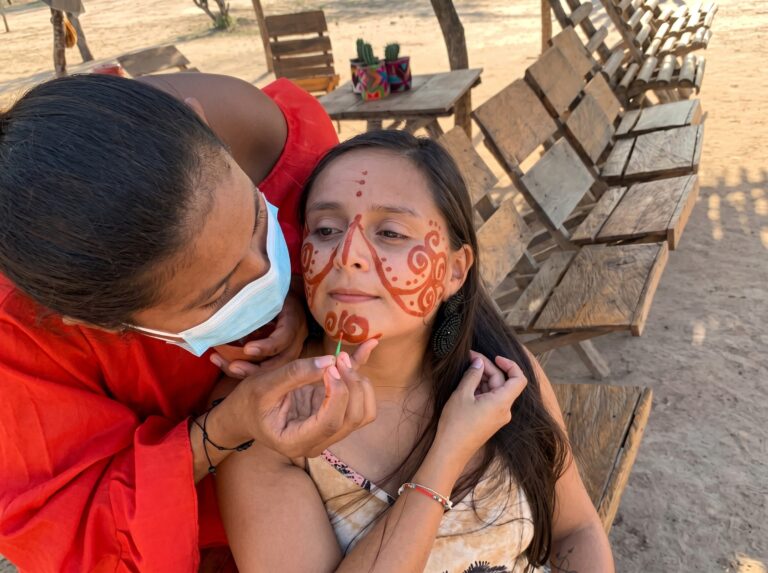
The ranchería This is the traditional type of accommodation in La Guajira. To enrich your visit with a truly cultural experience, we recommend staying in a Wayuu ranchería to share their daily life: going fishing, helping with lunch, drawing water from the well, learning to knit a backpack, Listen to the legends of the elders before falling asleep rocked in the hammock by the desert wind.


Moments from the experience in Wayuu rancherías · Photos: History Travelers
How we operate: At History Travelers, we work directly with carefully selected Wayuu families—no intermediaries. We know them personally. When your group arrives, you'll be welcomed by a family who knows us and treats their guests with respect and warmth.
Kitesurfing in Punta Gallinas
With winds of 25 to 35 knots Consistently, Punta Gallinas has three spots: the Luz Mila lagoon (all levels), The Little Mouth (intermediate level) and the Taroa dunes (Experts only). We have a 5-day kitesurfing tour with a certified bilingual instructor. Ask us for details.

The natural diversity of La Alta Guajira · Photo: History Travelers
Zone 02Visit the Middle Guajira
Lively towns and coastal cities with Caribbean charm.
Palomino
What was once a quiet coastal corner has become a popular destination on the Colombian Caribbean coast with a strong backpacker culture. We like its relaxed atmosphere and good selection of hotels and restaurants. The main activity is... tubing in the river — float from the mountains to the sea on inner tubes.
Let's be honest: the overtourism This has caused severe erosion on the beach and strong currents that are not ideal for swimming. For those seeking authenticity, Dibulla is a better option.
Dibulla
The small fishing village of Dibulla, Still untouched by mass tourism, it offers a much quieter and more authentic alternative. Just a 10-minute taxi ride away, Punta de los Remedios It offers glamping and romantic hotels. Life here unfolds to the rhythm of the tides and fishing activities.
Riohacha — the starting point
The capital of La Guajira is the indispensable starting point for any tour to the desert and the city from which we operate. It has a good coastal atmosphere, a pleasant boardwalk, and is known for its windy conditions for beginner kitesurfing.
The surrounding area offers highly recommended visits: the Manaure salt flats, the beach of Mayapo and the Flamingo Sanctuary.
For the proximity to the border with Venezuela, Avoid certain outlying neighborhoods and going out at night outside of busy areas in Riohacha. The city center and the waterfront are safe during the day.

Sunset at Playa Dorada / Cabo de la Vela · Photo: Leiner Pinto
Zone 03Visit the Lower Guajira
Fertile land and deep cultural heritage.
Livestock and agriculture
The southern part of La Guajira, the Lower Guajira, It is the most fertile area. The main municipality is Barrancas, on the banks of the Ranchería River.
Vallenato
The Lower Guajira is the cradle of vallenato, the most representative musical genre of Colombia, declared Intangible Cultural Heritage of Humanity In 2015, it blends indigenous, African, and European influences. The most important festival is held every April in Valledupar.
The Montes de Oca
A forest reserve of 25 km tropical dry forest on the border with Venezuela, known for its turquoise waters. One of the best-kept secrets of the Lower Guajira. It's best to go with a tour agency—independent travelers have had some issues.

The Montes de Oca, a natural border between Colombia and Venezuela · Photo: Leiner Pinto
LogisticsWhere to sleep in La Guajira
Wayuu Rancherías — the authentic option
A ranchería is the traditional rustic lodging in the desert. Don't expect luxury—there's no air conditioning, the electricity goes out frequently, and there can be water problems. But after a day of exploring, you'll sleep remarkably well, lulled by the Caribbean breeze.
- Simple hammock — The most economical and the coolest. The Caribbean wind acts as a natural air conditioner.
- Hammock — The traditional Wayuu hammock: bigger, more enveloping, handmade. The most authentic experience in La Guajira.
- Single bed — For those who can't sleep hanging upside down. Some ranches have rooms with beds. Basic but functional.

Walapuinje Ranch — traditional Wayuu lodging · Photo: Leiner Pinto
Oceanfront boutique hotels
For those who prefer more comfort after the desert. Palomino It offers the widest variety — from hostels to luxury options. The beach of Mayapo It also has higher-end hotels such as the Aiwa Hotel.
Wellness hotels and retreats
The Lower Guajira region at the foot of the Sierra Nevada has attracted yoga and meditation instructors. Hotel One Sanctuary and the Hotel Chapolin They are the best known in this category.
GastronomyWhat to eat in La Guajira

The cuisine of La Alta Guajira: simple, honest, and delicious · Photo: History Travelers
Seafood casserole
Don't leave La Guajira without trying the seafood casserole. Seafood cooked in a clay pot with a creamy sauce made with coastal cheese and local herbs—one of the most authentic flavors of the Colombian Caribbean. In Riohacha, we recommend The Seafood House. In Palomino, 7 Seas.
The friche
Among the most representative dishes of Wayuu cuisine: the friche. Shredded goat meat, boiled and then fried, served with yucca, rice, or corn bread. The desert dish—simple, hearty, prepared with goat from the family's own flock. The first time you try it, it's always a pleasant surprise.
Meat and fish stews
Stewing is the traditional cooking method for meats and fish (stewed fishThe fish in the Upper Guajira comes from the sea that morning — without intermediaries. That's noticeable in the flavor.
The chirrinche
The fermented beverage of sugarcane which the Wayuu consume in their rituals. You can't find it in any store—they'll offer it to you at sunset in the ranchería. Accept it respectfully. It's part of the Wayuu courteous protocol.
For vegetarians: Fresh vegetables are scarce in the desert. If you have dietary restrictions, please let us know when booking—we coordinate alternatives with Wayuu families, but we need to know in advance.
How to get to La Guajira
Multi-day tours — the best option
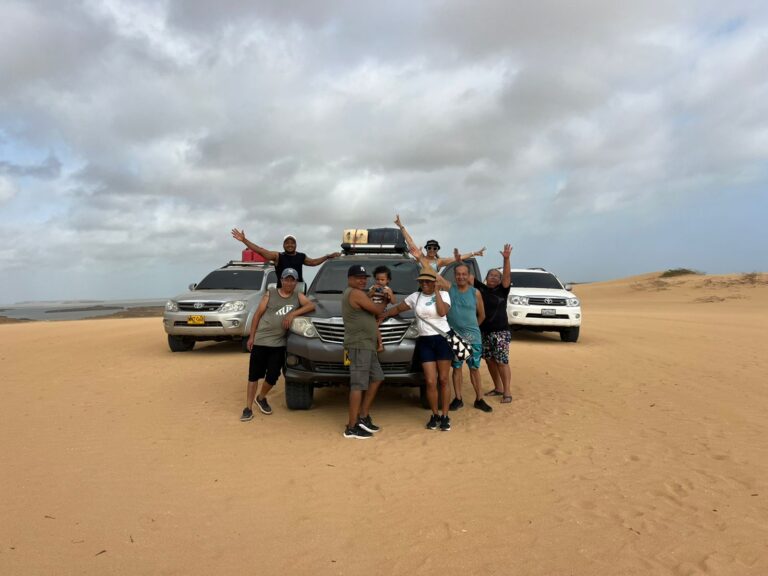
It's the best way to explore the Upper Guajira and immerse yourself in the Wayuu culture. 3 or 4 day tours in 4x4 jeep They guarantee good organization, well-maintained vehicles, and competent drivers, even when unexpected events occur. Travel light and be patient—unexpected events are part of the journey.
The airport
There are daily flights from Bogotá and Medellín a Riohacha — the only airport in La Guajira. The flight takes just over an hour. The airlines are Latam y Avianca. If you're only going to Palomino, you can fly to Santa Marta (2h15 to the village by bus).
The buses
Regular connections between Santa Marta and Riohacha (3 hours) and Cartagena and Riohacha (7–8 hours). Companies: Rapid Ochoa, Copetran, Brasilia Express y Unitransco. You can stop a bus on the road by signaling to the driver.
Shared taxis and jeeps
The shared taxis They are a good option for stretches like Palomino–Riohacha. shared jeeps They go to Cabo de la Vela and Punta Gallinas—they're the cheapest option, but the drivers aren't always the most experienced, nor are the vehicles the best maintained. Beware of breakdowns in the desert.

Our 4x4 trucks crossing the Guajira desert · Photo: History Travelers
Essential tipsWhat you need to know before you go
Is it safe to travel to La Guajira?
In general, traveling to La Guajira It's safe. We don't recommend going alone in a rental car—you could get lost and not know how to interact with the Wayuu. There are no police stations in the desert: the Wayuu manage everything according to their own laws, and that system works.
In more than ten years of operation, We have never had a security incident in the Upper Guajira with any group. We recommend going with a reputable local agency.
How to choose an agency — the key criteria
Jeeps 4x4, preferably with air conditioning. Ask if they are owned by the company or subcontracted.
The trail to Punta Gallinas is known to those who have traveled it hundreds of times.
A well-planned program, backup plans in case of unforeseen events, and a network of local contacts.
The money from the tour should go directly to the host families, without layers of intermediaries.
Registration at Fontur. Detailed package with water, accommodation, meals and specified guide.
Packing list for the desert
- Comfortable and lightweight clothing — long-sleeved t-shirts, a sweater for the evenings, a hat or cap
- Headlamp and external battery — electricity is scarce or non-existent at night
- Basic medicines — Imodium, high factor sunscreen, insect repellent
- Toilet paper and hand sanitizer — don't take them for granted in the desert
- Enough cash in small bills — there are no ATMs in Cabo de la Vela or Punta Gallinas
- Lightweight backpack 30–40 L — forget about the big suitcases in the jeep
Bring enough cash
In La Guajira There are very few ATMs. Pick it up at Santa Marta before going to Palomino, and in Riohacha Before entering the desert, bring small bills for Wayuu bags and additional expenses.
Good health and patience
Exploring the desert involves long days in a jeep in a demanding environment. You need to be in good physical condition. Unexpected events are part of the experience—patience is key to turning them into anecdotes, not frustrations.

View from Cerro Kamaichi “Sugarloaf” · Photo: Leiner Pinto
What travelers say+1,000 reviews on TripAdvisor · 4.8 on Google
“We are very happy with the agency, they fulfilled the entire itinerary, we are going home very happy, thank you very much!!”
“Everything with the agency was excellent, they coordinated the itinerary perfectly, the meals were delicious, and the places were absolutely stunning. Special mention goes to our guide, Yerri, who was always helpful and provided constant support. Highly recommended.”
“Very good — I had a lot of fun, learned so much about Wayuu culture and the food was delicious. I highly recommend the agency, it's very good, comfortable and comprehensive.”
“Everything was wonderful. The guide was always very attentive. The agency fulfilled all its promises. The food was super complete and delicious. The accommodations were comfortable and clean.”
La Guajira awaits us · Photo: History Travelers