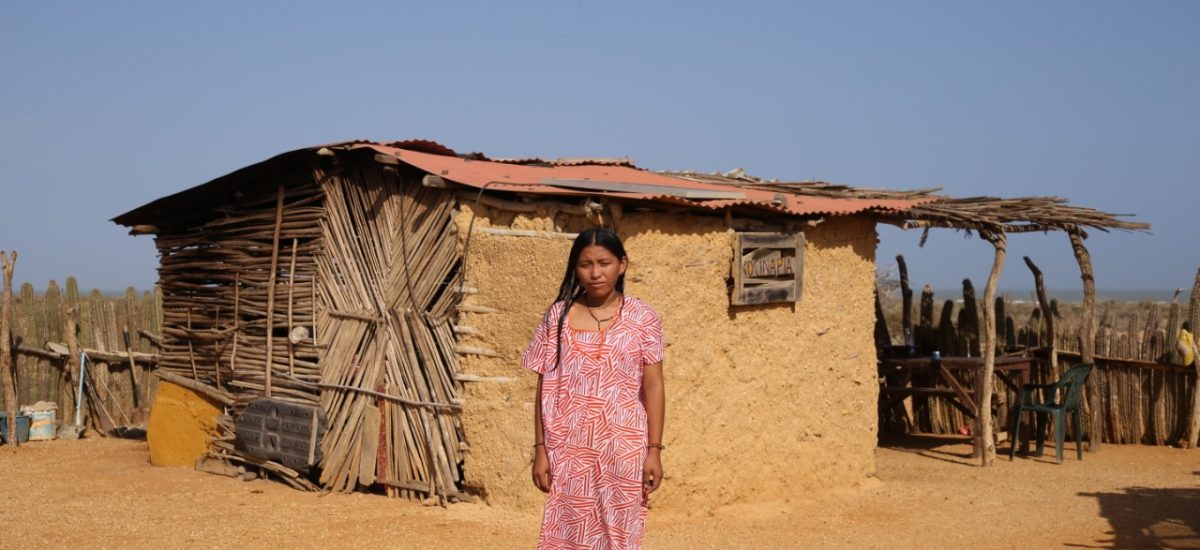
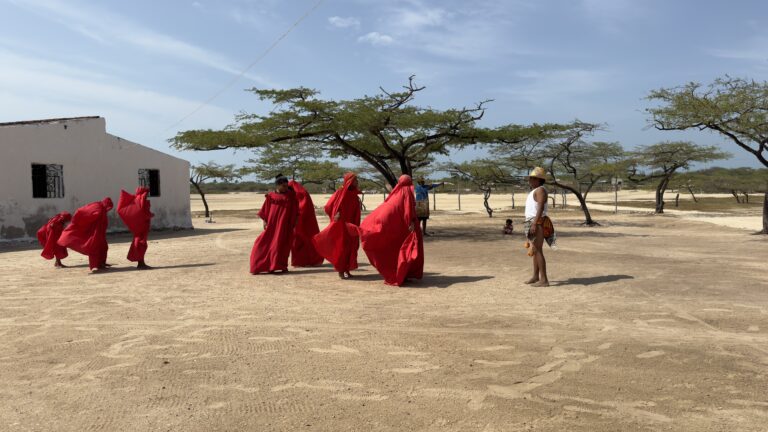
Introduction: Why We Do What We Do
There's something you need to know about History Travelers from the very beginning: We are not a travel agency that decided to "do something good" to improve its brand image.
We are the exact opposite.
Are People who love La Guajira and its people, and decided to use tourism as a tool to build something better. We didn't start by asking ourselves, "How do we sell more tours?" We started by asking ourselves, "How can we live with dignity in this territory without exploiting it?"“
The answer was community-based tourism. But not just any tourism. A tourism that respects, dignifies, and builds together with the communities.
Our essence consists of three inseparable elements: We are Soil, Sky, and People. And when we say "People," it's not just a nice slogan. It's a a daily commitment, sometimes uncomfortable, always necessary, profoundly transformative.
This article is not a corporate report on “corporate social responsibility.” It is the raw and honest story of Why do we participate in projects like “Economies for Life”?”, And why for us working with communities is not a marketing strategy, but the reason we exist.
“People”: The Third Pillar of Our Essence
We already talked about Floor (the arid and generous land of La Guajira, the fragile ecosystems that we protect).
We already talked about Darling (the stars that guide, the storms that teach, the immensity that humbles).
Now it's time to talk about People. And this is where our story becomes personal.
We didn't come to "help"“
Let's be clear from the start: We didn't arrive in La Guajira with a savior mentality.. We are not an NGO. We do not believe in handouts. We do not think that the Wayuu communities “need our help to get ahead.”.
What we DO believe is that:
- The Wayuu communities have knowledge, traditions, and extraordinary abilities that the world needs to value
- Tourism can be a fair trade bridge between cultures – not an extractive relationship
- We have certain skills (marketing, tourism management, networks) that we can put at the service of a larger project
- Together we can build something that benefits everyone: transformed travelers, empowered communities, cared for territory
The difference lies in the "how"“
When other operators arrive at a Wayuu ranchería, they negotiate like this:
Operator: “I will pay you $20,000 to host this group of 8 people for one night.”
Family: “But food, water, and electricity for the group cost more…”
Operator: “Take it or leave it. There are other ranches that do accept that price.”
That's called tourism extractivism. It's not illegal. But it's immoral.
When History Travelers arrives at a ranchería, the conversation is different:
Us: “How much do you need to properly accommodate 8 people? Tell us all your actual costs.”
Family: “Water, food, gas, time, wear and tear on hammocks… it would be like $60,000.”
Us: “Perfect. We will pay you $80,000 – the extra is for your cultural knowledge that you share, and so that you have a fair profit margin.”
The difference? Respect. Transparency. Justice.
And yes, that means our tours cost more than the competition. But it also means that The money goes in full to the person who does the work.
Why We Participate in “Economies for Life”
In recent years, the Ministry of Culture of Colombia (through its Strategy, Development and Entrepreneurship Directorate) has been working on something revolutionary.
Instead of traditional welfare programs (“we give money to the poor and hope they use it well”), they are building a model where Communities strengthen their own economies from their culture, traditions, and knowledge.
Is called “Economies for Life” And it has a beautiful premise:
“The best economies are those that sustain life, not those that exploit it.”
When we learned about this program, We didn't have to think twice about it. It was exactly what we'd been doing for eleven years, but now with:
- Institutional support from the State
- Proven methodologies
- Training resources
- Connecting to larger networks
- Specialized technical support
What exactly is “Economics for Life”?
It is a program that strengthens cultural, popular and community economies in priority territories of Colombia.
What does that mean in human language?
Imagine this:
Maria She is a Wayuu weaver who makes spectacular bags. It takes her four weeks to weave one. An intermediary pays her 1,440,000 pesos. That intermediary resells them in Bogotá for 1,442,500,000 pesos.
José He is a bilingual young Wayuu man who knows every dune, every legend, every star of the desert. But he works as an “assistant” to outside guides who charge 1,441,500,000 per tour. José receives 1,443,000 as a “tip.”.
The Jepira Collective They have a beautiful ranch in Cabo de la Vela, they receive tourists occasionally, but they don't know how to promote themselves, they lack basic tools, and their income is inconsistent.
What does “Economics for Life” do?
- He teaches Maria to calculate the real value of her work, connects her with direct buyers, gives her tools to sell online, integrates her into networks of knitters
- Certifies José As an official guide, he provides first aid training, teaches environmental interpretation, and connects you with responsible operators like us.
- Strengthens the Jepira Collective with training, basic equipment, marketing strategies, and partnerships with operators
The result: Maria sells her backpacks for 120,000-150,000 TP. Jose works as a lead guide, earning 120,000 TP per tour. The Jepira Collective has steady work and a decent income.
The Four Approaches That Make Us Fall in Love
“Economics for Life” doesn’t just have good goals. It has a philosophy which resonates deeply with everything History Travelers believes in and practices.
1. Territorial: Each Place Is Unique
The beginning:
Recognize that each territory has its own history, customs, economy, ways of life, and relationship with nature. It is not just a piece of land – it is a space full of meaning.
How we experienced it at History Travelers:
We don't design routes thinking "what looks pretty in photos?" but "what has meaning for the communities?".
Specific example:
There's a stunning rock formation near Punta Gallinas that would be perfect for "epic Instagram photos." But for the Wayuu community in the area, it's a sacred place where spiritual ceremonies are performed.
Other tour operators take groups there without permission. Tourists climb on the rocks, leave trash, and disturb the environment.
Us We didn't take anyone there. Period. No matter how much the travelers insist. Respect for territorial boundaries is non-negotiable.
Instead, we take them to spaces that communities have designated as shareable – places where cultural exchange is welcome and beneficial for all.
2. Biocultural: Nature and Culture Are Inseparable
The beginning:
Caring for nature using ancestral knowledge and traditions. Protecting the environment without forgetting culture.
How we experienced it at History Travelers:
The Wayuu don't "take care of the desert" because they read modern ecology manuals. They take care of it because Their cosmogony teaches them that they are part of it, not owners.
Specific example:
On our tours, when a traveler asks "why are there no trees in the desert?", the Wayuu guide does not respond with data on rainfall and temperature.
It tells the story of Pulowi, The woman, spirit of the drought, explains how the Wayuu understand the water cycles through their mythology. She shares ancestral techniques for collecting fog water.
The result: the traveler doesn't just learn about desert ecology. He learns a completely different way of relating to nature – one that the West desperately needs.
3. Intercultural: Encounters of Truth
The beginning:
Promote respect and coexistence among different cultures. Listen to each other, learn from one another, work together., valuing what each group contributes without anyone giving up their identity.
How we experienced it at History Travelers:
We don't sell "authentic experiences with exotic indigenous people." We facilitate real human encounters where everyone learns.
Specific example:
On a night in Cabo de la Vela, after dinner, we don't "put on a Wayuu show for the tourists.".
Instead, we created a space where:
- The Wayuu grandmother tells stories of Maleiwa while she weaves.
- Travelers share stories from their own territories
- They ask each other questions with genuine curiosity
- Sometimes someone takes out a guitar, someone else a traditional instrument, and spontaneous music emerges
- Wayuu children practice their Spanish with travelers
- Travelers learn basic words in Wayuunaiki
The result?
Real human connections. Not transactions. Not performances. Genuine Exchange.
We have seen friendships that last for years. Travelers who return. Spontaneous acts of solidarity when the community faces difficulties (droughts, diseases).
4. Integrated Heritage: Everything Is Connected
The beginning:
Protect and value the heritage in its entirety: objects (a funerary urn), customs (a ceremony), nature (a sacred spring). Everything is connected.
How we experienced it at History Travelers:
We do not artificially separate “cultural tourism” and “nature tourism”. In La Guajira, Every landscape has cultural significance, and every cultural practice is related to the landscape..
Specific example:
When we take travelers to the Flamingo Sanctuary in Camarones, it's not just a "birdwatching tour".
It is an integrated experience where:
- We explain the ecological importance of the mangrove ecosystem
- We share Wayuu legends About flamingos (why are they pink? there's a beautiful story)
- We connect with the salt-producing families who traditionally work in the area
- We talked about local economy (artisanal vs industrial salt)
- We reflect on sustainable tourism (how to observe without disturbing)
In the end, the traveler didn't see "only birds." He understood a complete ecosystem: natural, cultural, economic, social.
What Makes History Travelers Different
After eleven years working in La Guajira, we have clearly identified What makes us different? from other operators.
1. We Live Here – We Are Not Visitors
Most agencies have offices in Bogotá, Medellín, and Cartagena. They come to La Guajira to "do tours" and then leave.
Us We live here. Hammocks Hostel in Riohacha is our home. Our children attend local schools. We shop at neighborhood stores. We vote in municipal elections.
Why does it matter?
Because when something happens in the community – a drought, a celebration, a problem – We experienced it with them. We are not outsiders looking from the outside.
2. More than 90% of Our Team is Local
Our guides are Wayuu, our coordinators are Guajiro, our drivers are from Riohacha. We don't bring in "experts" from Bogotá.
Why does it matter?
Because every dollar we pay in salaries He stays in La Guajira. Furthermore, local knowledge is irreplaceable – our team knows the communities, the roads, the dynamics, in a way that no “external expert” could.
4. Long Term, Not Rapid Extractivism
We don't arrive, we do 50 tours, and we disappear. We carry eleven years building relationships of trust with the same communities.
Why does it matter?
Because the real impact isn't immediate. It's cumulative:
- First year: building trust
- Second year: co-designing experiences
- Third year: Refine quality
- Fourth year: Increase revenue
- Fifth year: generating stable jobs
- And so…
We're not looking for "quarterly results." We're looking for sustainable transformation.
5. We don't compete, we collaborate
Unlike other agencies, we do not see other responsible operators as “competition”.
If another operator wants to learn our model, we openly share. If you need contacts for reliable communities, we connect them. If you want to understand how fair pay works, we show you.
Because?
Because our goal isn't to be the only successful agency. It's that All tourism in La Guajira should be responsible.. That requires the model to be replicated, not kept as a "trade secret".
6. Travelers are allies, not just customers
We don't see travelers as "buyers of a product." We see them as allies in building a better tourism model.
We explained it to them clearly:
- Why our tours cost more (and where every penny goes)
- What impact does your trip have?
- How can they continue to support communities after the trip
- Which behaviors are respectful (and which are not)
Result: Travelers who consciously choose to pay more because they understand the value. And who return, recommend them to friends, and become ambassadors for responsible tourism.
Why “Economics for Life” Was the Next Natural Step
When we learned about the Ministry of Culture's program, it was as if someone had designed something specifically for us.
Why Did We Get Involved?
Reason 1: Scale
We had been working well for eleven years, but with limited reach. The program allows us impact many more production units which we could do on our own.
Reason 2: Resources
The program brings seed capital, specialized training, and technical support that we could not finance on our own.
Reason 3: Networks
It connects us with other organizations, operators, and communities at a national level, they work in the same way. We learn from them, they learn from us.
Reason 4: Legitimacy
The support of Ministry of Culture and UNIMINUTO It lends institutional seriousness to community work. It ceases to be "that well-intentioned project of a tourism agency" and becomes part of a public policy for territorial development.
Reason 5: Coherence
The program's approaches (territorial, biocultural, intercultural, integrated heritage) are exactly Those of us who were already practicing. We didn't have to change our philosophy – we simply found like-minded allies.
Our Specific Role
We are not the program implementers (that's UNIMINUTO's job). We are local strategic allies that:
1. We connect the program with communities in La Guajira that otherwise would not reach
2. We facilitate characterization processes (we know the families, we speak their language, we have their trust)
3. We accompany technically in matters of community tourism (it is our specialty)
4. We integrate Strengthened production units along our tourist routes (we guarantee marketing)
5. We guarantee Post-program sustainability (when the program ends, the communities will continue working with us)
Real Challenges (Because Not Everything Is Perfect)
We would be dishonest if we portrayed community work as easy. The truth is, it is. difficult, complex, sometimes frustrating.
Challenge 1: Different Expectations
The problem:
Some people come to the program thinking they're going to be "given money." When they realize it requires work, commitment, and time, some are disappointed.
How we handle it:
Crystal-clear communication from the start. “This is NOT handouts. It’s co-creation. We provide the tools and training, you provide the work and commitment.”
Challenge 2: Different Times
The problem:
Government programs have strict deadlines. Wayuu communities have a more organic timeline (ceremonies, mourning, natural cycles that interrupt activities).
How we handle it:
Flexibility where possible. And when that's not possible, individualized work so that no one is left behind.
Challenge 3: Limited Digital Literacy
The problem:
Many training programs assume basic knowledge of cell phones, computers, and social media. In remote communities, many people are just beginning to learn.
How we handle it:
History Travelers acts as a “digital bridge”:
- Additional basic cell phone use workshops
- Printed materials as support
- One-on-one support for profile creation
- Young people from the communities as “digital role models”
Challenge 4: Historical Mistrust
The problem:
The Wayuu communities have suffered decades of broken promises from governments, NGOs, and corporations. When a new program arrives, there is justified skepticism.
How we handle it:
- Total transparency from the start (what we CAN offer and what we CANNOT)
- Strict adherence to every small commitment
- Constant presence on the ground (we don't just show up for workshops)
- History Travelers as a “bridge of trust” (the communities already know us)
The Future: Sustainability Beyond the Program
The “Economies for Life” program has a defined duration. But History Travelers' commitment to the communities It does not have an expiration date.
What Happens When the Program Ends?
This is where our community tourism model becomes critical.
Most programs fail in sustainability. They strengthen communities during their implementation, but when the funding runs out, everything falls apart because there is no continuous demand for the products/services.
We'll take care of that.
All the productive units that we strengthen are integrated permanently in our operations:
- Community-based accommodations are our preferred option (not commercial hotels).
- Local guides are our core team
- The artisans are our suppliers of souvenirs
- Gastronomic collectives feed our groups
Result: Continuous revenue stream beyond the program.
Our Long-Term Commitments
1. Post-Program Follow-up
When the program ends, we will continue to visit, accompany, and support the production units.
2. Guaranteed Marketing
Annual contracts with accommodations, guides, and suppliers that guarantee minimum income.
3. Continuing Education
Quarterly workshops with our team to continue strengthening capabilities.
4. Connection with Other Operators
Invite other responsible operators to work with the same communities (diversify clients).
5. Constant Promotion
Our social media networks (20,000+ followers) constantly promote community products and services.
Call to Action: Be Part of This Story
This isn't an article for you to "admire how good we are." It's an invitation for you to be an active part of building a different kind of tourism.
If You Are a Traveler:
1. Travel With Purpose
The next time you book a tour, ask:
- Who benefits financially from my trip?
- How much of the price reaches local communities?
- What impact does my presence have?
If they can't answer your question, find another operator.
2. Pay Fair Prices
When you see cheap crafts, ask yourself: who is losing out so that I can pay so little?
Aggressive haggling exploits artisans. Pay a fair price. It's a political act.
3. Connect Humanly
You're not buying a "tour product." You're entering the lives of real people. Connect. Listen. Learn. Appreciate.
4. Amplify
If you have a genuine experience with communities, share it. Recommend responsible tour operators. Educate other travelers.
If You Are a Tourism Entrepreneur:
1. Copy This Model (For Real)
We don't keep secrets. If you want to learn how to practice responsible community-based tourism, contact us. We'll share everything with you.
2. Pay fairly
Even if it costs you more. Even if you have less leeway. Human dignity is not negotiable.
3. Think Long Term
Don't extract value quickly. Build long-term relationships. The best business is the one that sustainably benefits everyone.
If You Are a Community:
1. Know Your Worth
Your culture, your knowledge, your territory – all of that has immense value. Don't let anyone make you believe otherwise.
2. Get organized
Together they are stronger. Create networks, collectives, associations.
3. Seek Genuine Allies
There are operators like History Travelers who want to work with you fairly. Seek them out. Build with them.
Conclusion: People Caring for People
In the end, it all boils down to something very simple:
We are people.
People who live in La Guajira. People who love this territory. People who decided that tourism could be a tool for transformation instead of exploitation.
We're not perfect. We make mistakes. We learn along the way.
But we have been proving for eleven years that Another kind of tourism is possible. A type of tourism where:
- The communities control their territories
- The benefits are distributed fairly.
- Culture is valued without becoming folkloric
- The environment is protected
- Travelers are transformed
- We all win
Programs like “Economies for Life” allow us scale that impact. Reach more families. Strengthen more productive units. Build larger networks.
But the heart remains the same: People taking care of people.
We are Soil (territory that we respect).
We are Heaven (the horizon that inspires us).
We are People (communities that constitute us).
And if you travel with us, you too will be part of this story. Not as an observing tourist. As co-builder of a fairer world.
Will you join?
Contact us
E-mail: historytravelersguajira@gmail.com
WhatsApp: +57 310 277 1745
Web: www.historytravelers.com
Social networks:
Instagram: @historytravelers
Facebook: History Travelers
Office: Hammocks Hostel, Riohacha, La Guajira
Resources and References
On “Economies for Life”:
- Ministry of Culture – Directorate of Strategy, Development and Entrepreneurship (DEDE)
- UNIMINUTO – Science and Social Innovation Park (PCIS)
- “Economies for Life” Program”
Allied Organizations:
- Colombian Network of Community Tourism
- National Natural Parks of Colombia
- Fontur – National Tourism Fund
Final Note: This Is Real
Everything you read here is real. These aren't "hypothetical cases" or "illustrative examples." They are stories of real people with whom we work.
We use pseudonyms to protect privacy, but María, José, the Manaa Collective – They all exist. Their transformations are real. Their testimonies are real.
History Travelers' community work is not marketing. It's our mission. reason for existing.
If you ever travel with us, you'll meet them. You'll share friche at their home. You'll hear their stories. You'll see with your own eyes the impact of responsible tourism.
And maybe, just maybe, you'll go home a different person.
That is our promise.
© 2026 History Travelers. People Caring for People in La Guajira, Colombia.