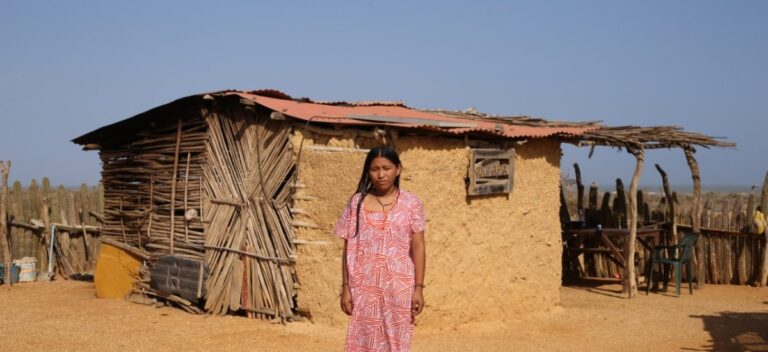
Wayuu Clans: what they are, their meaning, origin and social organization
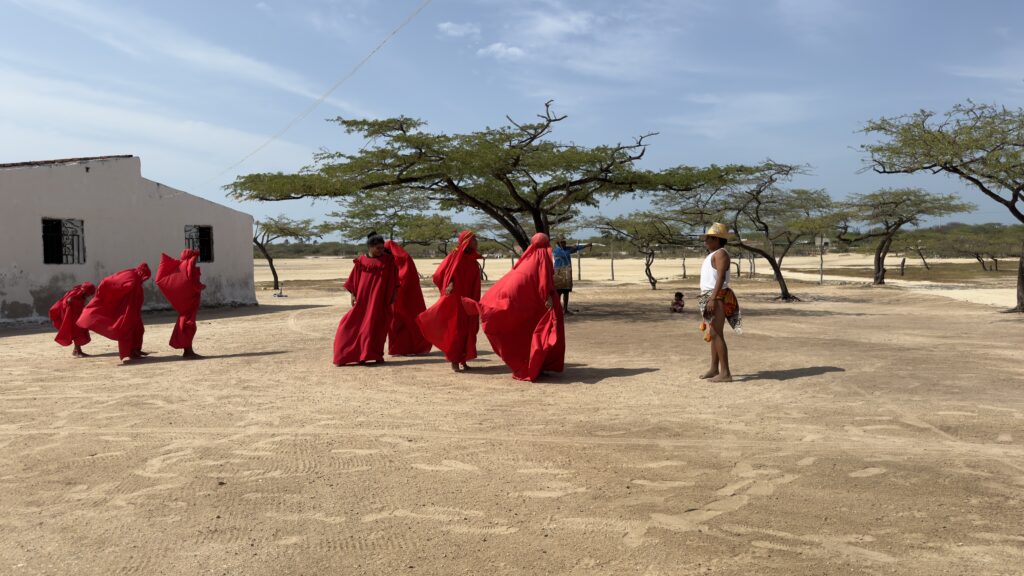
Learn about the Wayuu clans, their origin, social organization, matrilineal system, the totems of each clan, and why they continue to be the heart of Wayuu culture in La Guajira.
Paola Forero, leader of community tourism in La Guajira
Every time I recall how I first encountered La Guajira, the Colombian desert, I think, “My heart clicked the moment I stepped off the plane, and I haven’t been able to leave since.” I arrived as head of social studies at the Albania School in Albania, a mining region in Colombia, and soon after, I quit my job and founded History Travelers, a tour operator that offers community-based experiences to just over 60 tourists daily. (Walapuinje Ranch; photo: Leiner Pinto) Today, it is very gratifying to see our operation and the income we generate, highlighting our way of operating, this income stays in La Guajira, Atlántico, Bolívar, Magdalena and Cesar, among the Wayuu, Arhuaco, Kogui, Mestizo, Raizal and local communities, where our SME has trained and helped create 17 ventures that today offer tourist experiences with local communities, we hire 27 drivers and benefit 200 people who have changed from mineral extraction to sustainable and community tourism. (Sunset at Playa Dorada/Cabo de la Vela; Photo: Leiner Pinto) It's a source of pride to walk down the street or visit communities and destinations where we conduct tourism and have people greet me enthusiastically and affectionately call me 'Pau,' especially since I'm a 41-year-old woman from Bogotá, originally from the interior of the country, "a stranger to this land." I feel that I've somehow won the hearts of the Guajiro people. I'm a historian and anthropologist from the Pontifical Javeriana University, specializing in contemporary studies and with a master's degree in multicultural studies and science from the University at Buffalo in New York, in a land like this, where academic achievements are valued little and personal relationships and tribal pacts are valued highly. I arrived in Albania (a municipality in La Guajira) as a teacher. However, a Holy Week vacation when my parents came to visit me changed my life. We rented a pickup truck to visit the most iconic sites, but the vehicle broke down and we paid for roadside assistance, leaving us without food or lodging. In response, the Wayuu people offered us snails and prawns and provided us with the best possible hospitality. It was a truly moving experience. I deeply appreciated this human warmth, which contrasts sharply with the well-known needs of the arid and inhospitable La Guajira region and its abundant natural resources. I saw great potential in this sector, and with my head full of ideas, on May 21, 2014, I decided to create History Travelers with a different, collaborative economic model for the benefit of the communities. I don't own anything; we have a network of 27 drivers, 17 tourism experience businesses, and hotels—all community-owned—from Cabo de la Vela to Punta Gallina. We own the name, but nothing more. (Rainbow Beach; Photo: Leiner Pinto) We decided to focus on activities and experiences different from traditional tourism. ‘Our destinations offer you the most diverse nature and authentic cultural experiences with the indigenous and farming communities of northern Colombia. We are land, sky, and people.’ As a small business, we offer excursions to the desert, hikes, birdwatching, visits to the Manaure Salt Flats, Cabo de la Vela, Punta Gallinas, the Macuira Mountain Range, Salamanca Island Park, Valledupar, Pueblo Bello, Nabusímake, Tierra Grata, Manaure, the Don Diego River, Tayrona National Park, Ciénaga Grande, the historic center of Cartagena, the Rosario Islands, San Basilio de Palenque, and other Caribbean destinations, always staffed by locals. This has allowed us to position ourselves in the 'responsible tourism' sector in just eight years. The first big step came with a large tour requested by Hernán Acevedo, a leader in community and nature tourism in Colombia and former president of Acotur (Colombian Association of Responsible Tourism), to which History Travelers belongs. Acevedo contacted us to fly small planes to Cabo de La Vela with leaders and businesspeople from the country's strongest economic sectors. (Montes de Oca; photo: Leiner Pinto) That day, in just two hours, products from the communities, such as woven backpacks, were sold. We generated revenue from lunches at Cabo de La Vela, and the community-run hotels saw sales. This boost marked the beginning of a "differentiated tourism" for high-income individuals. Later, French, Swiss, and other international tourists arrived, along with NGOs from these countries that decided to support the communities in their new venture. The momentum was so strong that we were able to survive the lockdowns during the pandemic. In August 2020, a few tourists began to arrive again, this time domestic tourists eager for more natural destinations. (View from Cerro Kamaichi “Sugarloaf”; Photo: Leiner Pinto) Today, we are a small business that responsibly and ethically serves a large number of tourists daily on tours throughout La Guajira and the Colombian Caribbean, respecting the value chain, from our offices in Riohacha, Santa Marta, and Cartagena. We have 10 employees on the payroll and benefit from the ZESE (Special Economic and Social Zone) program, a special tax regime created by the national government because most of La Guajira is desert or semi-desert, where access is difficult and job opportunities are scarce. Having the green business and tourism certification has been crucial, opening doors not only with clients but also with organizations and NGOs that support us in overcoming challenges related to training and formalizing communities. This is especially important given the prevalence of informality in the region, which tops the list of difficulties we've faced as an SME. Our new initiatives for 2023 will focus on the Macondo Natural Route, funded by Swiss resources, and in Cartagena, we'll be promoting tourism with the Raizal people through the Insider Tours venture. After eight years, we're thrilled to continue growing, to have an ever-increasing number of partners who believe in our approach to tourism, and to continue helping entire families generate their own income.
WE ARE PEOPLE WHO CARE FOR PEOPLE: The Community Heart of History Travelers
Introduction: Why We Do What We Do There's something you need to know about History Travelers from the very beginning: we're not a tour agency that decided to "do something good" to improve its brand image. We're the exact opposite. We're people who love La Guajira and its people, and who decided to use tourism as a tool to build something better. We didn't start by asking ourselves, "How do we sell more tours?" We started by asking ourselves, "How can we live with dignity in this territory without exploiting it?" The answer was community-based tourism. But not just any tourism. Tourism that respects, dignifies, and builds alongside the communities. At our core are three inseparable elements: We are Land, Sky, and People. And when we say "People," it's not just a pretty slogan. It's a daily commitment, sometimes uncomfortable, always necessary, and profoundly transformative. This article is not a corporate report on "corporate social responsibility." This is the raw and honest story of why we participate in projects like “Economies for Life,” and why, for us, working with communities is not a marketing strategy, but the reason we exist. “People”: The Third Pillar of Our Essence. We’ve already talked about the Soil (the arid and bountiful land of La Guajira, the fragile ecosystems we protect). We’ve already talked about the Sky (the stars that guide, the storms that teach, the immensity that humbles). Now it’s time to talk about People. And this is where our story becomes personal. We Didn’t Come to “Help.” Let’s be clear from the start: we didn’t come to La Guajira with a savior mentality. We are not an NGO. We don’t believe in handouts. We don’t think that the Wayuu communities “need our help to get ahead.” What we DO believe is that: The Difference Lies in the “How.” When other tour operators arrive at a Wayuu ranchería, they negotiate like this: Operator: “I’ll pay you $20,000 to host this group of 8 people for one night.” Family: “But food, water, and electricity for the group cost more…” Operator: “Take it or leave it. There are other rancherías that accept that price.” That’s called extractive tourism. It’s not illegal. But it’s immoral. When History Travelers arrives at a ranchería, the conversation is different: Us: “How much do you need to properly host 8 people? Tell us all your real costs.” Family: “Water, food, gas, time, wear and tear on hammocks… that would be about $60,000.” Us: “Perfect. We’ll pay you $80,000 – the extra is for your cultural knowledge that you share, and so you have a fair profit margin.” The difference? Respect. Transparency. Justice. And yes, that means our tours cost more than the competition. But it means the money reaches the people who do the work in full. Why We Participate in “Economies for Life” In recent years, the Colombian Ministry of Culture (through its Directorate of Strategy, Development, and Entrepreneurship) has been working on something revolutionary. Instead of traditional welfare programs (“we give money to the poor and hope they use it well”), they are building a model where communities strengthen their own economies based on their culture, traditions, and knowledge. It’s called “Economies for Life” and has a beautiful premise: “The best economies are those that sustain life, not those that exploit it.” When we learned about this program, we didn’t have to think twice. It was exactly what we had been doing for eleven years, but now with: What Exactly Is “Economies for Life”? It is a program that strengthens cultural, grassroots, and community economies in priority areas of Colombia. What does that mean in human terms? Imagine this: María is a Wayuu weaver who makes spectacular bags. It takes her four weeks to weave one. A middleman pays her 40,000 pesos. That middleman resells it in Bogotá for 250,000 pesos. José is a bilingual young Wayuu man who knows every dune, every legend, every star in the desert. But he works as an “assistant” to outside guides who charge 150,000 pesos per tour. José receives 30,000 pesos in “tips.” The Jepira Collective has a beautiful ranchería in Cabo de la Vela. They receive tourists occasionally, but they don't know how to promote themselves, they lack basic tools, and their income is inconsistent. What does “Economies for Life” do? The result: María sells her bags for 120,000-150,000 pesos. José works as a lead guide, earning 1,400,000 COP per tour. The Jepira Collective has steady work and a decent income. The Four Approaches That We Love: “Economies for Life” not only has good objectives, but also a philosophy that resonates deeply with everything History Travelers believes in and practices. 1. Territorial: Every Place Is Unique. The principle: Recognizing that every territory has its own history, customs, economy, ways of life, and relationship with nature. It is not just a piece of land—it is a space full of meaning. How we experience this at History Travelers: We don't design routes thinking, “What looks good in photos?” but rather, “What has meaning for the communities?” Concrete example: There is an impressive rock formation near Punta Gallinas that would be perfect for “epic Instagram photos.” But for the Wayuu community in the area, it is a sacred place where spiritual ceremonies are held. Other operators take groups there without permission. Tourists climb the rocks, leave trash, and disturb the space. We don't take anyone there. Period. No matter how much travelers insist. Respect for territorial significance is non-negotiable. Instead, we take people to spaces that communities have designated as shared—places where cultural exchange is welcome and beneficial for everyone. 2. Biocultural: Nature and Culture Are Inseparable. The principle: Caring for nature using ancestral knowledge and traditions. Protecting the environment without forgetting culture. How we experience it at History Travelers: The Wayuu don't "care for the desert" because they've read modern ecology textbooks. They care for it because their cosmogony teaches them that they are part of it, not its owners. Concrete example: On our tours, when a traveler asks, "Why are there no trees in the desert?", the Wayuu guide doesn't respond with rainfall and temperature data. They tell the story of Pulowi, the spirit woman of drought. They explain how the Wayuu understand the water cycles through their mythology.